Rodent Removal in Atlantic Beach, FL
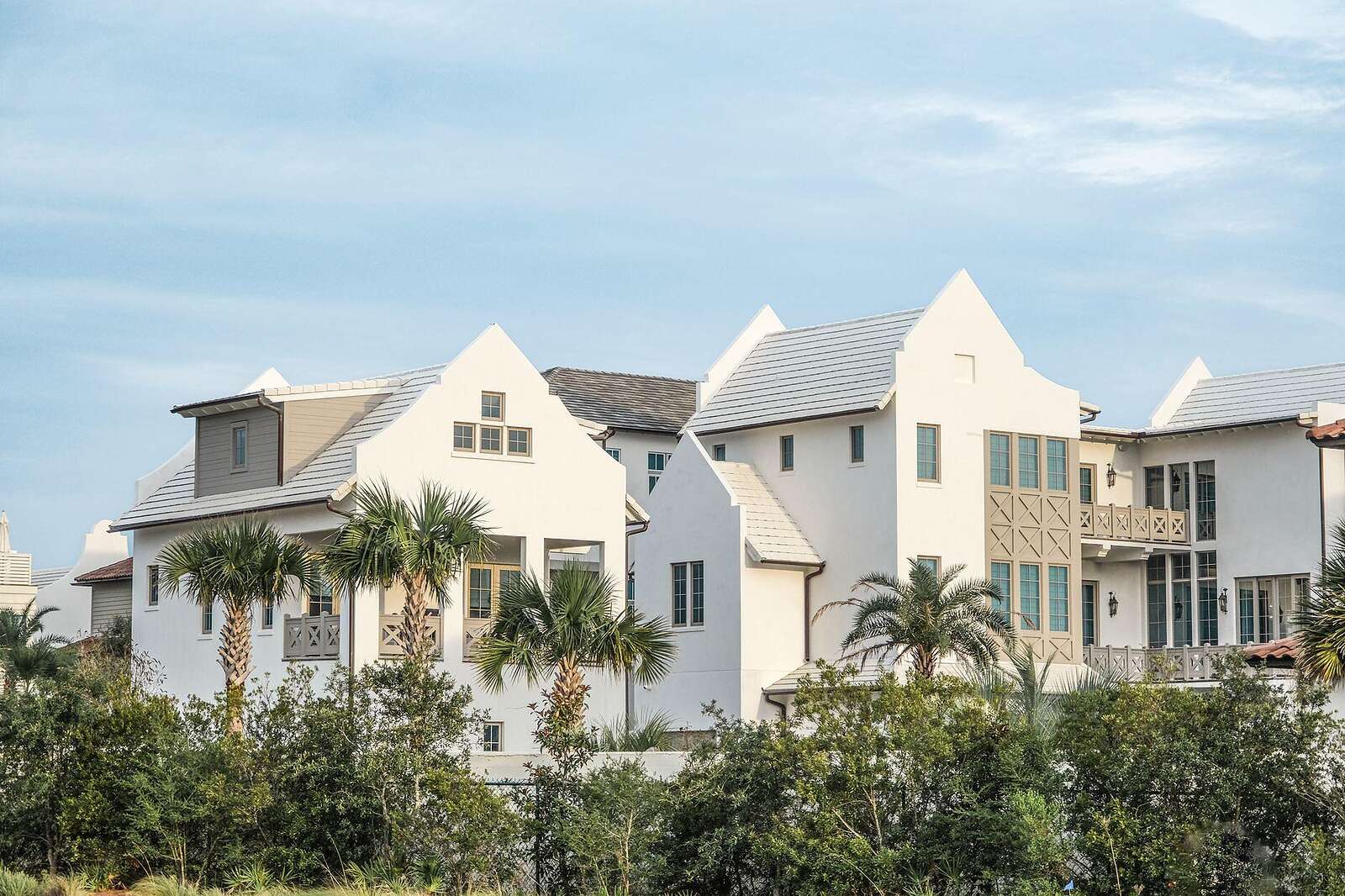
Atlantic Beach runs from the dunes to the Intracoastal marsh, and the houses between are a mix of older cottages with raised floors and later block construction under heavy oak canopy.
- Raised floors and block, both
- Marsh side read as well
- Free inspection, written up
Free Inspection in Atlantic Beach
The free inspection here establishes the foundation first, because Atlantic Beach has both kinds. On a raised cottage the walk covers the space under the floor as well as the roofline; on a block slab house it is the ladder, the attic and the garage. Either way the contractor maps every opening a quarter inch or wider, reads the attic with a light for droppings and flattened insulation, and finishes with the yard and the back of the lot.
Atlantic Beach sits in Duval County, roughly twenty miles from downtown along Atlantic Boulevard, so the contractors covering the city cover it on the same dispatch. The number is answered 24 hours a day. Describe whether the noise is above you or below you, because on this side of the Intracoastal that distinction usually decides which species is involved, and a dispatcher books the visit from there. The contact page carries the hours and the address.
Book the free Atlantic Beach inspection
Name, number and what you are hearing. A dispatcher calls back to set a time with the contractor who covers Duval County.
Older cottages with a space under the floor
Atlantic Beach carries more pre-1970 housing than the beach towns to its south, and a share of that older stock sits on piers or a raised perimeter wall rather than directly on a slab. That changes the job completely, because a raised floor is a second envelope with its own openings: vent frames, skirting panels, the sill line where the floor framing meets the foundation, and the plumbing and electrical penetrations underneath.
Those openings are also where the salt gets to them. A vent screen in a damp under-floor space a few blocks from the ocean corrodes at its edges, and a skirting panel that has taken storm water sits loose in its frame. Both are closures that looked finished when they were installed and are openings now, which is why the walk goes underneath rather than looking in from the access hatch.
The later block-on-slab houses behave like the rest of the Beaches: a roofline list of soffit returns, gable and off-ridge vents, roof-to-wall junctions and the air conditioning line sleeve, plus the garage. The exclusion page sets out what goes into each opening, and the quote lists them individually either way.
Maritime oaks and the roof rat route
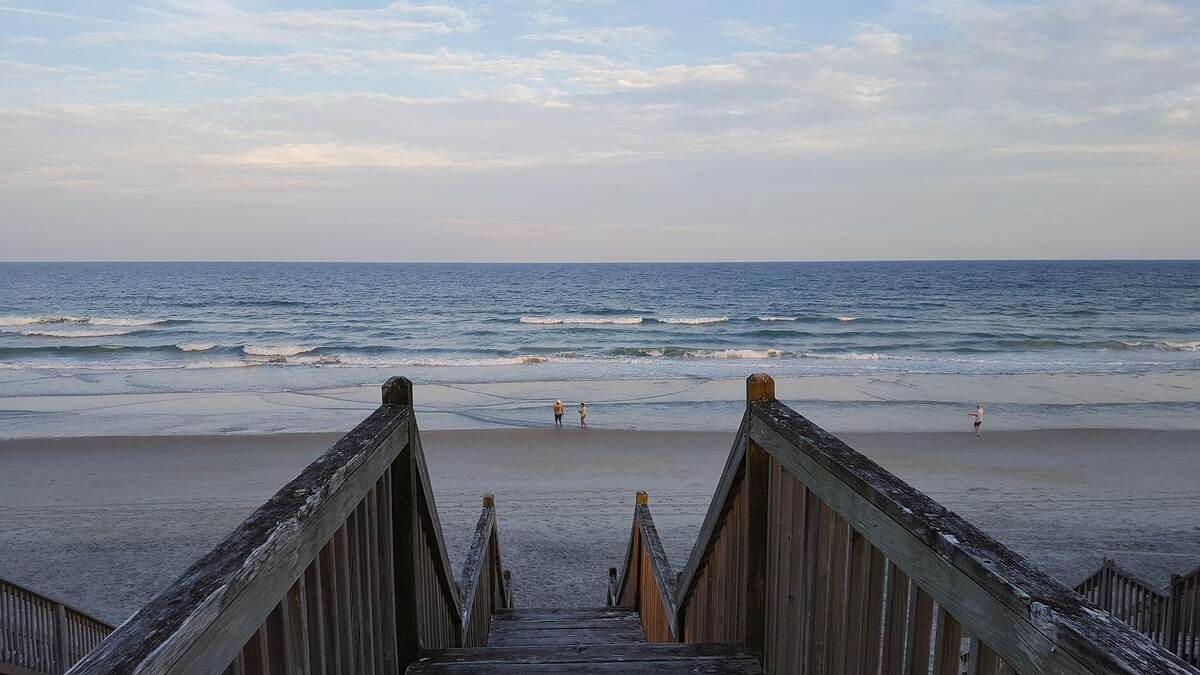
The streets back from the dunes here carry heavy maritime canopy, with live oaks shaped by the wind and dense understory between the houses. That cover is the neighborhood's character and it is also the road in. UF/IFAS describes the roof rat as arboreal, moving along branches, wires and palm trunks, and puts its working range at roughly 150 yards from its den, so a closed canopy over a street means every roof on it is reachable from several yards at once.
The practical list is short. Limbs that touch a roof, a fascia or a fence line that leads to a roof. Palm crowns holding dead fronds, which are nest sites at roof height. And dense understory growing up against a wall, which gives ground cover right to the foundation. All of it reduces the pressure on the sealing and none of it needs a pest contractor, so an inspection that names the specific limbs is handing over the cheapest part of the fix.
Service wires count too and get missed. A drop landing on the side of a house beside an unsealed penetration is a route with a door at the end of it, and the inspection notes the wire entry along with the limbs.
The Intracoastal side of town
The western edge of Atlantic Beach faces the Intracoastal Waterway and the salt marsh behind it, and that is Norway rat country. These are burrowing ground rats, and marsh edges, bank vegetation, bulkheads and dock structures give them continuous harborage up to the properties along the water. They come in at floor level rather than from the canopy: a garage, a utility room, an under-floor space, a service penetration at grade.
The sign reads differently and is worth recognizing before you call. Smooth runs worn through ground cover at the back of a lot, burrow mouths at the base of a wall or a bulkhead, gnawing at the bottom corner of a garage door, and droppings along a wall at floor level rather than in the attic insulation. On a raised cottage with marsh behind it the route is as short as it gets anywhere in the county.
High water moves them. Jacksonville's flood exposure is river and tidal as much as oceanfront, and when a burrow floods the animals in it relocate to the nearest dry structure. The CDC links rises in leptospirosis cases to hurricanes and flooding, names rodents among the animals carrying it, and recommends rodent control as part of the response. Ground-level trapping is covered on the Norway rat page.
What We Handle in Atlantic Beach
The work available in Atlantic Beach matches the two kinds of house here, above the ceiling and below the floor.
- Roof rat removal: attic trapping after the soffit returns and vents are closed, which the canopy streets generate most
- Norway rat removal: ground-level trapping and burrow work on the Intracoastal and marsh side of town
- Rodent exclusion: roofline openings on block houses, and under-floor vents, skirting and sill lines on the older cottages
- Rodent inspection: the free walk that establishes the foundation type and produces the opening list
- Attic cleanup: droppings and soiled material out, the space treated, the nests removed
- Dead rodent removal: finding a carcass behind a smell in a wall, an attic or an under-floor space
- Post-storm inspection: the roofline and the perimeter walked again after wind or tidal flooding
A Typical Atlantic Beach Job
The situation: A 1950s wood cottage on the marsh side of town, raised on a low perimeter wall with vented under-floor space, oaks over the rear roof and a short bulkhead at the back of the lot. Movement under the living room floor in the evenings, nothing overhead at all, and a chewed corner on a sack of potting compost in a garden store. The owner has been hearing it for a month and assumed it was raccoons outside.
What gets done: The under-floor walk finds two vent screens corroded out of their frames, a skirting panel loose at the rear, a run worn through the ground cover from the bulkhead to the side of the house and two burrow mouths in the bank behind it. Droppings under the floor read as Norway rat, and the attic is clean, so no roofline work is quoted. Burrows are collapsed and the ground cover is cut back from the wall, the vent frames are screened in quarter-inch galvanized cloth with stainless fixings, and traps go along the sill under the floor and inside the garden store. The loose skirting panel stays open with a trap on it and closes at the second visit.
How it turns out: Two visits and a check two weeks later, with the under-floor footage, the garden store and the trapping on separate lines and no attic work on the quote. The floor noise stops after the first check. The owner gets photographs of the closed vents and a note about keeping the bank vegetation cut back from the bulkhead.
What This Costs in Atlantic Beach
What a job costs here depends mostly on whether the house has a space under the floor, because that is the part measured by the foot. The published bands below are the reference points; the free inspection turns them into a quote with the lines separated.
| Work | Typical band | Source |
|---|---|---|
| Full-home exclusion | $500 to $2,500 | HomeGuide 2026, national |
| Trapping and removal | $250 to $1,200 | HomeGuide 2026, national |
| Removal visit, Tampa | Average $1,078, typical $441 to $1,716 | Angi, nearest Florida metro with published figures |
| Attic cleanup and decontamination | $600 to $2,500 | HomeGuide 2026, national |
| Dead rodent removal | $150 to $500 | HomeGuide 2026, national |
A block house on slab with a clean under-floor answer sits low in the exclusion band. An older cottage with a vented under-floor space, corroded screens and loose skirting sits higher, because the perimeter is continuous and priced by the foot rather than by the opening. Salt corrosion is the local reason a house that was sealed once needs some of it done again, and the inspection says which closures have failed rather than quoting the whole list afresh.
Rodents in the attic
What is happening above the ceiling, explained.
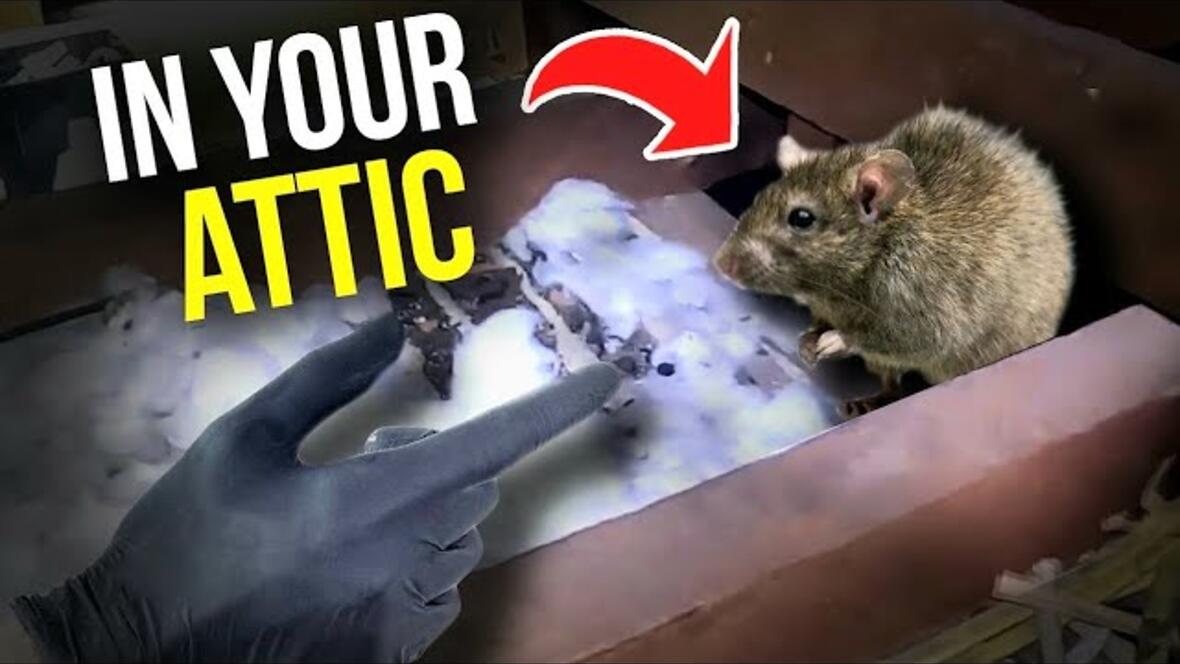
Video: Rodents in your ATTIC!? Here's what you do, from Twin Home Experts.
Common Questions in Atlantic Beach
What Atlantic Beach callers want settled first.
Which problem you have
It is under the floor rather than in the attic. What does that mean?
Almost always the ground species, which is the Norway rat, and Jacksonville has far more of it than South Florida does. It burrows along marsh edges, bulkheads, banks and dense ground cover and enters at floor level, so what you hear is movement below you rather than running overhead. The work is different too: burrows collapsed, ground cover cut back from the wall, and the under-floor vents, skirting and sill line closed in steel, with traps along the sill rather than in the attic. Nothing about the roofline needs quoting if the attic is clean.
How do I know whether my house has a space under the floor?
Look along the base of the exterior wall for vents or grilles just above ground level, and listen for a hollow sound underfoot rather than the solid feel of a slab. Older cottages here often have a low perimeter wall with vent openings and skirting panels; later block houses sit on a slab with neither. It matters because the under-floor perimeter is priced by the foot while the roofline is priced by the opening, so the foundation decides the shape of the quote. The inspection establishes it before anything is measured.
Keeping it closed
What keeps rats away permanently?
A closed building and a yard that gives them nothing to work from. Repellents, ultrasonic devices and bait stations do nothing about an opening, and a roof rat ranges about 150 yards from its den according to UF/IFAS, so the animals are in the neighborhood whatever you do. What holds is quarter-inch steel at every opening, screens fixed rather than stapled, and then the cheap yard work: limbs off the roof, dead fronds out of palm crowns, understory cut back from the wall, and nothing edible stored in an open bag in a garage or a shed.
We sealed the house years ago and it is back. Why?
Usually corrosion rather than a new route. Salt-laden air works on screens, mesh and fixings continuously this close to the water, and a galvanized screen that was sound a decade ago can perish at its edges and lift out of its frame. Once a corner opens past a quarter inch it is an entry again, and nothing looks different from the driveway. The inspection checks the existing closures rather than assuming them, and the quote covers the ones that have failed rather than redoing the whole list. A yearly look with binoculars catches most of it early.
Still have a question? Call (904) 659-6044 and ask.
Nearby Areas We Serve
The contractors dispatched to Atlantic Beach cover the neighboring Duval County communities as well, and the whole Northeast Florida region is inside the service area.
Book a Free Inspection in Atlantic Beach
Say whether you hear it above or below, and whether the lot runs toward the marsh. The walk covers the roofline and the under-floor space at no charge.