Attic Cleanup and Decontamination in Jacksonville
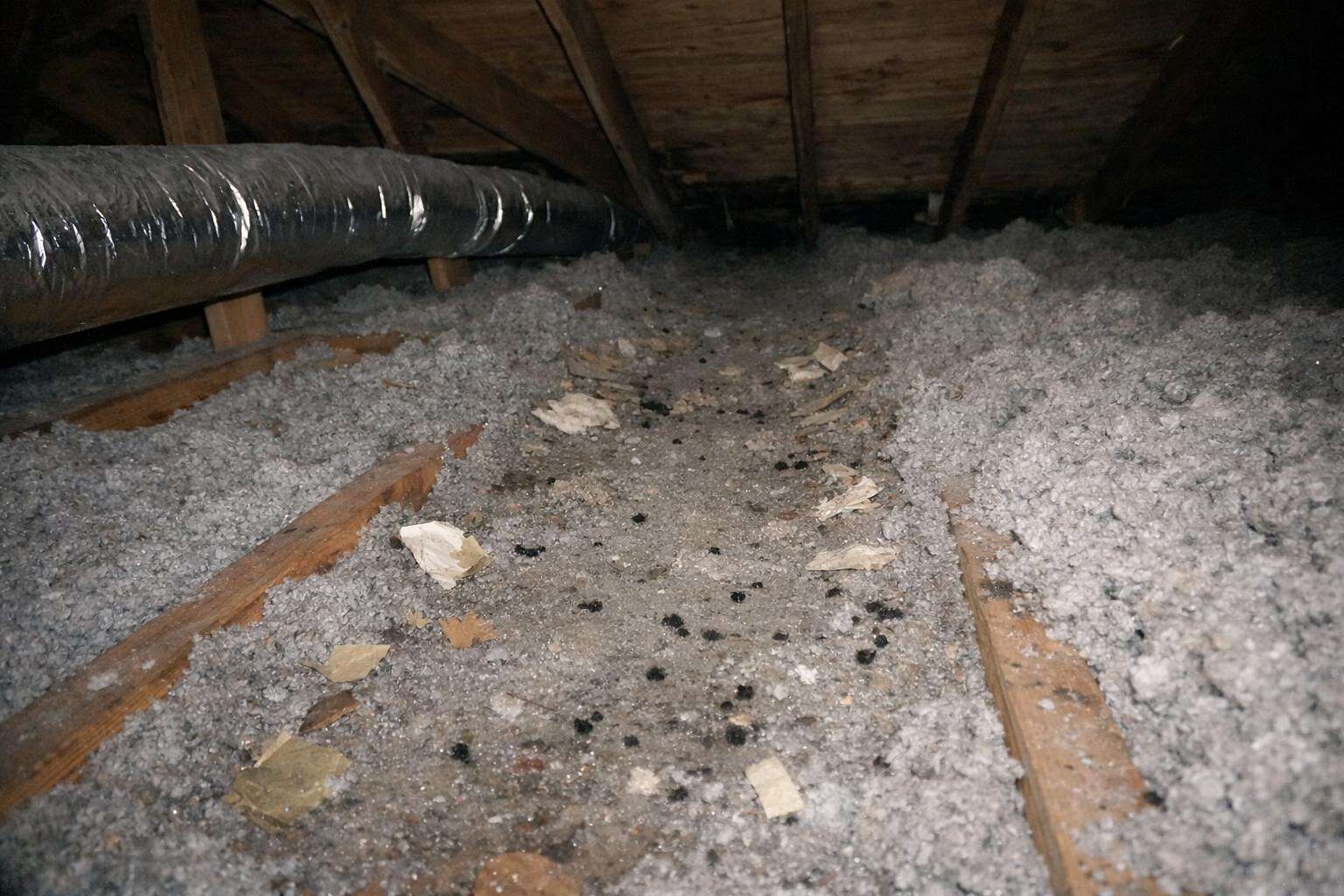
Once the trapping is finished the attic still holds droppings, urine-soaked insulation and nesting material in the joist bays. Cleanup removes it, sanitizes what is left and deals with the smell, and it is quoted as its own piece of work.
- Bagged out and carried down
- Sanitized after removal
- Priced apart from the trapping
What attic cleanup in Jacksonville includes
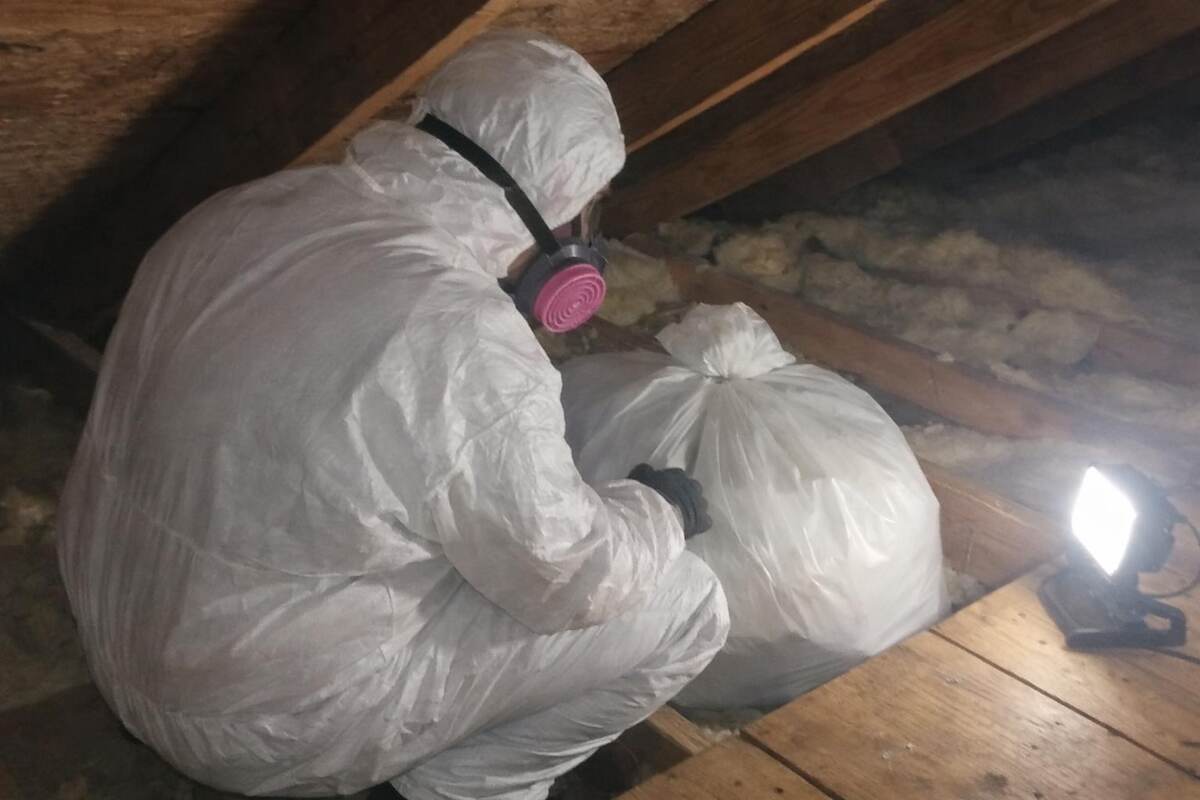
Cleanup is a removal job followed by a treatment, and both halves belong on the quote separately from the trapping that came before. The contractor works in protective clothing and a respirator, lifts out the droppings and nesting debris by hand and by vacuum, bags the insulation that has been flattened into runs or soaked, and then treats the decking, the joists and the top plates with an antimicrobial.
The order matters. Cleaning before the animals are out and the openings are closed means doing it twice, so the cleanup is booked after the attic has been quiet on a verification visit. On a Jacksonville house that verification usually lands two to four weeks after the sealing, depending on how many runs the trapping had to work.
- Droppings, urine staining and nesting material removed from the joist bays, the top plates and around the chase penetrations
- Insulation lifted and bagged wherever it is compacted into runs or wet, with the rest left in place
- An antimicrobial applied to the decking, framing and remaining insulation surface, then an odor treatment where the smell has settled into the material
- Chewed wiring and damaged ducting photographed and reported, since neither is rodent work and both need their own trade
- Debris carried out and disposed of, with the access hatch and the path through the house protected
Where the insulation has to come out across most of the attic rather than in patches, the replacement is its own job with its own figure, described on the insulation replacement page.
Book the free inspection
Say what you hear, where in the house, and how long it has been going on. A dispatcher lines up the nearest certified contractor for a free roofline, attic and crawl-space inspection.
Why the attic gets cleaned rather than left
Three reasons carry real weight, and one that gets sold hard does not. The first is health, stated the way the CDC states it: rodents are known to carry many diseases, passed on directly through contact with urine, droppings, saliva or a bite, and indirectly through fleas, ticks and mites that fed on an infected animal. No total number of diseases appears on the live CDC material, so any site quoting one is quoting something that has been withdrawn.
The second is the building. Urine-soaked insulation stays damp in a humid attic, and the Department of Energy is clear that wet insulation performs poorly and that compressed insulation does not deliver its rated R-value. An attic that has carried a rat population through a Jacksonville summer is usually both flattened and damp along the runs.
The third is the smell and what follows it. Nesting material and urine hold odor, and odor brings the next animal to the same route; a cleaned and treated attic is a less attractive address. What does not deserve the weight it gets is hantavirus. Florida's identified reservoir is the native cotton rat, an outdoor field species, and most United States cases are in the west. The respirator on a cleanup crew is there for general contamination and dust, which is worth saying plainly rather than dressing up.
Do I really need the cleanup, or can I skip it?
A light case can reasonably be declined, and an honest contractor will say which one you have. A handful of droppings along a single run in an attic with dry, intact insulation is a vacuum-and-treat job, and some homeowners take it on themselves with a respirator and a methodical afternoon. There is no reason to pretend otherwise.
What should not be skipped is an attic with runs worn into the insulation, staining on the decking, nesting material at the top plates or a smell that reaches the hallway. At that point the material is holding moisture and odor, the insulation has stopped performing, and leaving it means paying for it again when the next animal follows the scent. The inspection photographs the attic so the decision is made from what is there rather than from a description.
The one case where skipping costs the most is a house about to be sold or leased. Buyers' inspectors open the hatch, and a stained attic with visible runs becomes a negotiation item worth far more than the cleanup. A dated report covering the work is described on the clearance letter page.
What attic cleanup costs in Jacksonville
No Jacksonville operator publishes a cleanup figure, so the bands below come from national guidance and are turned into a quote at the free inspection. They are typical-job ranges rather than prices, and the size of the attic and the share of insulation coming out are what move a job inside them.
| Work | Typical band | Source |
|---|---|---|
| Attic cleanup and decontamination | $600 to $2,500 | HomeGuide 2026, national |
| Insulation removal and replacement | $2.50 to $5.50 per sq ft | HomeGuide 2026, national |
| Dead rodent removal, where one is found in the process | $150 to $500 | HomeGuide 2026, national |
| Full restoration of a badly damaged attic | $3,000 to $10,000 and up | HomeGuide 2026, national |
What pushes a Jacksonville attic up the band is usually access rather than area. A low-pitch 1950s ranch roof in Arlington where a worker cannot stand anywhere, a historic attic in Springfield with a single small hatch and no decked walkway, or ductwork running the length of the space all slow the work down more than square footage does. A newer two-story house in Nocatee or Bartram with a tall roof and a floored storage area is the quickest kind to clear.
How the work is carried out, and what gets protected
The method is a sequence designed to keep the contamination inside the attic, which matters more than the cleaning itself. Dust raised in a joist bay travels through every ceiling penetration in the house if nothing is done about it.
- The hatch area is sheeted and the route from the door to the hatch is covered before anything is moved
- The crew works in disposable coveralls and respirators, with gloves changed between the removal and the treatment stages
- Solids are lifted or vacuumed with a filtered machine rather than swept, since sweeping aerosolizes dried droppings
- Soiled insulation goes into sealed bags in the attic and comes down bagged
- The antimicrobial is applied after the removal rather than in place of it, and the odor treatment comes last
- Photographs before and after go with the report, along with anything found that belongs to another trade
One Jacksonville detail worth naming: a crawl space under a historic house collects the same material as an attic, and the same sequence applies underneath. On pier-and-beam houses in Riverside, Avondale and Ortega the crawl space is often the dirtier half of the job, and it is measured and quoted on its own.
The part nobody warns about, and what to do
Rodent mites after the rodents have gone are a real aftermath and almost nobody markets to it. When a population is removed, the mites that were living on the animals are left in the nesting material and move through the attic looking for a host. Homeowners describe bites starting a week or two after the trapping finished and assume the rats are back.
Removing the nesting material is what settles it, which is one more argument for not leaving a soiled attic in place. Where bites have already started, the cleanup crew treats the nest sites rather than the whole house, and a general pest control treatment under an FDACS-certified operator deals with anything that has moved down into the living space. Whoever attends should be asked directly whether nest removal is in the quote.
The claim worth ignoring is that rodent mites migrate through a house to bite people as a matter of course. That is not a sourced statement, and the honest version is that it happens sometimes, after the animals are gone, and nest removal is the answer.
What to check on whoever cleans your attic
Cleanup is sold after the stressful part of the job is over, which is exactly when a homeowner stops asking questions. A short list keeps it honest.
- Whether the quote covers removal and treatment, or treatment only. Spraying an antimicrobial over droppings that are still there is not cleanup.
- Whether the insulation coming out is measured in square feet, and what goes back.
- The FDACS credential of whoever is carrying out any pesticide or antimicrobial application. Under Chapter 482 of the Florida Statutes, the business holding a pest control license needs a certified operator, and the number can be confirmed on the FDACS license search.
- Whether the crawl space is included on a pier-and-beam house, and priced separately.
- What the report contains afterward, and whether the photographs come with it.
One more question settles most disputes before they start: is the attic being cleaned after a verification visit confirmed the activity had stopped, or on the same day as the trapping. Cleaning an occupied attic is work that has to be repeated, and the honest sequence is verification first.
The services that usually run with this one
A Jacksonville rodent job is a sequence of separate lines, and these pages cover the steps on either side of this one.
- Attic Insulation Replacement: Compressed or wet insulation taken out and fresh material blown in.
- Roof Rat Removal: Trapping the attic rat that answers most Jacksonville calls, sequenced with sealing.
- Dead Rodent Removal: Finding the carcass behind the smell, removing it, and closing the wall.
Who attends and which FDACS certificate to look up is set out on the about page. Hours, the downtown address and the full service area are on the contact page.
Clearing droppings from an attic
How contaminated material is taken out.
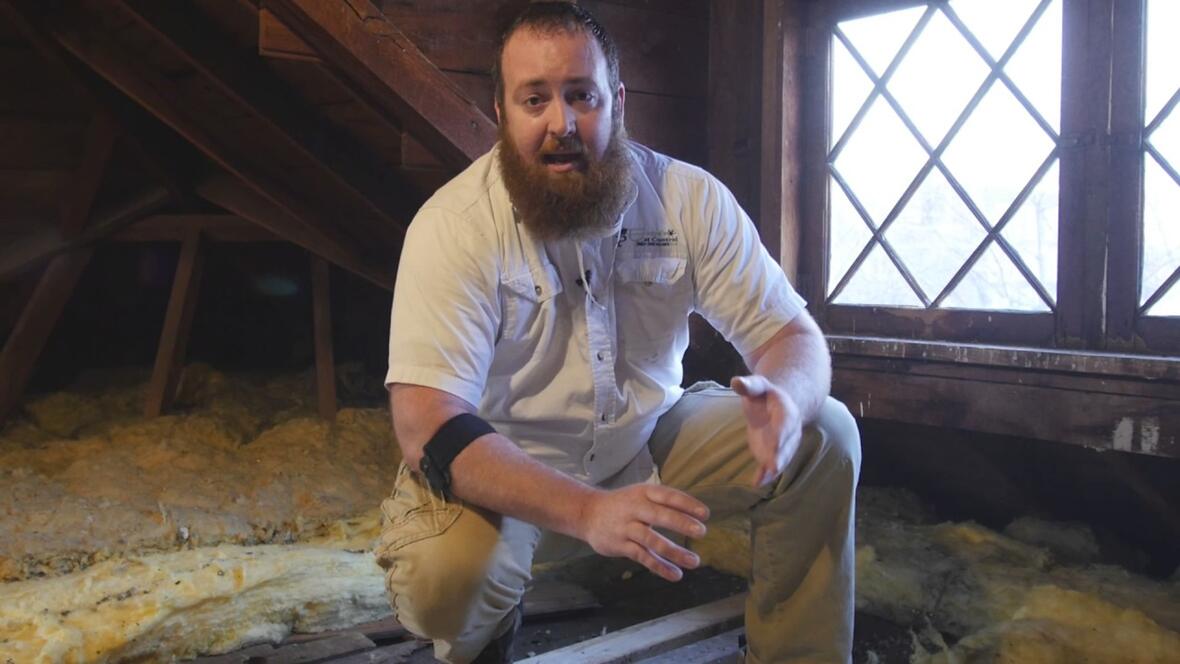
Video: How to Clean Up Animal Droppings In Your Attic, from Erdye's Pest Control.
How a Jacksonville attic cleanup runs
Five steps that start after the attic has been confirmed quiet.
-
Verify it is empty
A return visit checks for fresh droppings and fresh gnawing, because cleaning an attic that still has animals in it means doing the work twice.
-
Quote from the photographs
The attic is photographed, the share of insulation coming out is measured, and the removal and treatment appear as separate lines.
-
Protect the route
The hatch and the path through the house are sheeted, and the crew suits up before anything in the attic is disturbed.
-
Remove and bag
Droppings, nesting material and soiled insulation are vacuumed or lifted and bagged in the attic, then carried out sealed.
-
Treat and report
An antimicrobial goes on the decking and framing, odor is treated where it has settled, and the photographs go into a written report.
What makes a cleanup worth paying for
Three things that separate removal from a spray and a rake.
-
Removal before treatment, every time
The droppings, the nesting material and the soaked insulation come out of the attic in bags before any antimicrobial is applied, and the quote shows the two stages on separate lines. Treatment over material that is still in place leaves the odor, the moisture and the mite nests exactly where they were. On a pier-and-beam house the crawl space is measured the same way, because underneath the floor is often the dirtier half.
Wet insulation performs poorly and compressed insulation loses its rated R-value, U.S. Department of Energy
-
Plain talk about the health risk
The CDC says rodents are known to carry many diseases, spread directly through urine, droppings, saliva and bites and indirectly through fleas, ticks and mites. It gives no total, so no total appears here. Hantavirus is not the Florida attic risk it gets sold as, since the state's reservoir is the native cotton rat, an outdoor field species, and most United States cases are western. The respirator is for dust and general contamination.
CDC, diseases from rodents: direct and indirect transmission, no published count
-
A band on the page before the hatch opens
Attic cleanup and decontamination runs $600 to $2,500 in HomeGuide's 2026 national guide, and insulation removal with replacement runs $2.50 to $5.50 a square foot. Those figures are printed here so a quote can be held against something, and where a low-pitch Arlington roof or a single small Springfield hatch pushes a job up the band, the reason given is the access rather than the calendar.
Attic cleanup and decontamination $600 to $2,500 nationally, HomeGuide 2026
What Reddit Says About Attic Cleanup in Jacksonville
Cleanup is the line item people in r/pestcontrol and r/HomeImprovement are least sure about, and the threads split cleanly. Homeowners with a light case are told plainly that a respirator, a filtered vacuum and an afternoon will do it, and several report doing exactly that. Homeowners describing runs worn into the insulation, staining on the decking or a smell reaching the hallway are told to pay someone, because the material itself is the problem at that point.
The complaint that recurs is a cleanup sold as part of a bundle nobody could read. A single figure covering trapping, sealing and decontamination leaves no way to tell whether the cleanup was $300 or $1,800 of it, and the threads are full of people asking whether they were charged twice for the same afternoon. The advice is the same as for the sealing: separate lines, on identical scope, from more than one company.
Two practices get called out repeatedly. Spraying a deodorizer or an antimicrobial over droppings that have not been removed, which the threads describe bluntly as painting over the problem. And cleaning an attic on the same visit as the trapping, before anyone has confirmed the animals are out, which produces a second invoice a month later.
The aftermath nobody is warned about shows up in its own threads: bites starting a week or two after the rats were removed, which turn out to be mites left behind in the nesting material. People who had the nests removed do not post those threads. Worth asking whoever quotes your cleanup whether nest removal is explicitly included.
A typical cleanup in a Mandarin slab house
The situation: A 1990s single-story block house in Mandarin under two large live oaks, where roof rats had been in the attic through a winter before anyone called. Trapping and roofline sealing finished three weeks earlier, the verification visit found nothing fresh, and the owner wants the attic dealt with before the air conditioning season starts because the smell comes through the hall vents on a warm afternoon.
What gets done: The photographs show runs worn the length of four joist bays, staining on the decking under the main route, nesting material packed around the chase where the plumbing vent passes through, and the rest of the blown insulation dry and intact. The quote removes insulation from those four bays and around the chase rather than the whole attic, treats the full decking and framing surface, and handles the odor at the stained area. The hatch is sheeted, the material comes down in sealed bags, and a chewed section of low-voltage wiring is photographed for an electrician.
How it turns out: One working day, with the removal and the treatment on separate lines and the job landing in the lower half of the published cleanup band because the attic has standing room and a wide hatch. Fresh insulation goes back over the cleared bays in a second short visit. The hallway smell is gone within a few days of the treatment.
Questions about cleaning up after rodents
What people ask once the trapping is finished.
Safety and the smell
Is it safe to clean the attic myself?
For a small amount of dry droppings, with a respirator, gloves and a filtered vacuum, and nothing swept. Sweeping dried droppings puts the dust into the air, which is the thing worth avoiding. The CDC describes rodents as carrying many diseases, passed directly through urine, droppings, saliva and bites and indirectly through fleas, ticks and mites, and gives no total count for them. Where the insulation has been soaked, the nesting material is substantial, or the attic has no standing room, it stops being a reasonable weekend job and the protective setup is the reason to pay someone.
Will the smell go away on its own?
Some of it fades and some of it stays, and which one you have depends on the material. Odor sitting on a hard surface thins out over weeks once the animals are gone and the attic is ventilated. Odor held in urine-soaked insulation and nesting material does not, because the source is still up there, and in a humid Jacksonville attic the damp material keeps releasing it through every warm afternoon. That is why the removal and the odor treatment are sequenced in that order, and why an attic that smells through the ceiling vents is not a candidate for leaving alone.
Why did the biting start after the rats were gone?
Almost always mites that were living on the animals and are now in the nesting material looking for a host. It typically begins a week or two after the trapping finishes, and people understandably read it as the rats coming back. Removing the nests is what ends it, and where bites have reached the living space a general pest control treatment by an FDACS-certified operator handles the rest. Ask whoever quotes the cleanup whether nest removal is specifically included, since the word decontamination on its own does not say.
Scope and timing
Does all the insulation have to come out?
Only the part that is compacted into runs, stained or wet, which on most Jacksonville attics is a minority of the area. The Department of Energy gives the reason for taking that part out: compressed insulation does not deliver its rated R-value and wet insulation performs poorly, so those bays have stopped doing their job whatever else is true. Dry, undisturbed insulation stays where it is and gets treated on the surface. A quote that removes the whole attic by default should be asked to justify it bay by bay, and the photographs from the inspection are what that conversation runs on.
How soon after the trapping can the cleanup happen?
After a verification visit has found nothing fresh, which on a typical Jacksonville job lands two to four weeks past the sealing. HomeGuide puts the trapping stage at two to three days for a handful of animals and one to two months for a heavy infestation, and the cleanup waits on the end of whichever applies. Booking it earlier saves nothing, because an attic with animals still in it has to be cleared again. Where a smell or a carcass is making the house hard to live in, that part is handled straight away as its own job.
Still have a question? Call (904) 659-6044 and ask.
Book the cleanup once the attic is quiet
Call and the dispatcher books the verification visit and the cleanup quote together. The inspection costs nothing.