Commercial Rodent Control in Jacksonville, FL
Restaurants, warehouses, riverfront commercial buildings and apartment blocks carry a different rodent problem than houses do: mostly Norway rats at ground level, constant pressure from outside, and an inspector or a corporate auditor who wants records.
- Ground-level Norway rat work
- Documented visits and findings
- Sealing priced by the opening
What commercial rodent control in Jacksonville includes
A commercial job is a building envelope problem with a paperwork requirement attached, and the work is organized around both. The contractor maps the exterior for harborage and burrowing, seals the openings in the fabric, works the interior with traps and monitoring rather than open bait where food is handled, and leaves a record of every visit, every finding and every closure.
The documentation is not a formality on a site that gets inspected. A health inspector, an insurer, a landlord or a corporate auditor asks what was found, when, and what was done about it, and a contractor who cannot produce that on request costs the operator more than the rodents do.
- An exterior survey for burrows, harborage and run routes: dumpster pads, grease enclosures, loading docks, landscaping beds, pallet stacks, seawalls and bank vegetation
- Sealing of dock door seals, roll-up door corners, utility penetrations, floor-to-wall junctions, vents and any void behind cladding
- Interior trapping and monitoring on the runs, with bait stations used only where food handling and the FDACS category permit and never as a substitute for sealing
- A visit record per attendance, with findings, actions and photographs
- A plan for the parts of the problem the building owner rather than the tenant controls, which on a leased unit is usually most of the exterior
- Staff guidance on the two or three practices that undo the work, typically door propping, dumpster lids and overnight waste
Where the property also has an attic or a ceiling void with roof rat activity, that side of the work reads like the residential job and is covered on the roof rat page.
Book the free inspection
Say what you hear, where in the house, and how long it has been going on. A dispatcher lines up the nearest certified contractor for a free roofline, attic and crawl-space inspection.
Why commercial Jacksonville is mostly a Norway rat problem
Commercial rodent pressure here runs along the ground, which makes it a different animal from the one in a suburban attic. Norway rats are burrowing ground rats, and Jacksonville gives them more to work with than South Florida does: the St. Johns River through the middle of the city, tidal creeks reaching into every district, a working port, seawalls and bulkheads, dock structures, and older commercial blocks downtown with service alleys and long-established harborage.
They burrow along foundations, under slabs, behind retaining walls and into bank vegetation, then enter at floor level through dock door gaps, worn roll-up door corners, utility penetrations and gaps at the floor-to-wall junction. A restaurant with a spotless kitchen and a grease enclosure twelve feet from a creek bank has an exterior problem rather than a hygiene problem, and treating it as the latter is how a site stays on a monthly contract for years.
Roof rats still appear in commercial work, mostly in strip centers and older buildings with accessible ceiling voids and trees against the roofline. The practical difference is where the survey starts. On a commercial site it starts at the perimeter and works inward, and on a house it usually starts on a ladder.
The Jacksonville property types and what each one needs
Each sector has a characteristic failure point, and naming it usually shortens the first visit considerably.
- Restaurants and food service. The grease enclosure, the dumpster pad and the back door are the three things that decide the outcome. Interior work is trapping and monitoring, since open bait around food handling is the wrong tool and a regulated one.
- Warehouses and distribution. Dock door seals and roll-up door corners are the entry, and pallet stacking against walls is the harborage. Northside and Westside industrial stock and the port districts carry the heaviest ground pressure in the city.
- Multifamily and condo buildings. The problem crosses unit boundaries, so a unit-by-unit response fails. Trash rooms, chutes, shared wall voids and the exterior perimeter have to be handled as one site, which is a board or management decision rather than a tenant one.
- Older downtown and riverfront commercial buildings. Long service histories, masonry with voids, basements and proximity to the river give Norway rats established routes that take a perimeter program rather than a visit.
- Offices, retail and medical. Usually the lightest case, where the work is sealing a handful of openings and a documented monitoring round, with discretion about timing.
- Property management portfolios. Multiple addresses with one reporting standard, so the record format matters as much as the trapping.
On a leased site the split between landlord and tenant responsibility decides what can be fixed at all, and it is worth establishing before the first invoice. Sealing the building fabric is usually the landlord's, and housekeeping and waste handling are usually the tenant's.
What commercial rodent work costs in Jacksonville
Commercial pricing is site-specific, because a 2,000 square foot restaurant on a creek bank and a 60,000 square foot warehouse share almost nothing. The published bands below are the residential national figures, included as a floor for scale rather than as a commercial quote, and the real number comes from the free site survey.
| Reference point | Typical band | Source |
|---|---|---|
| Trapping and removal, residential scale | $250 to $1,200 | HomeGuide 2026, national |
| Full-building exclusion, residential scale | $500 to $2,500 | HomeGuide 2026, national |
| Cleanup and decontamination, residential scale | $600 to $2,500 | HomeGuide 2026, national |
| Removal visit, nearest Florida metro with published data | Average $1,078, typical $441 to $1,716 | Angi, Tampa |
What drives a commercial figure is the length of the perimeter, the number of doors, whether the work has to happen outside trading hours, and how much of the exterior harborage is on the property. A site that can be sealed once and monitored quarterly costs a fraction of a site where the burrow pressure comes from a neighboring bank that nobody controls.
The quote structure worth insisting on is the same as the residential one: the one-time sealing separated from any recurring monitoring, each with its own figure and term. A single monthly number covering both makes it impossible to tell whether the building was ever closed at all.
The records an inspected site needs
Documentation is what turns rodent work into something a business can defend, and the standard is higher than most sites are given. A visit record should stand on its own months later without anyone remembering the visit.
- Date, time in and out, and the name and FDACS credential of whoever attended
- Findings by area, with the evidence described rather than scored: droppings, rub marks, gnawing, burrow openings, trap activity
- Actions taken, including every device placed or moved and every opening closed with its material
- Photographs of conditions and of completed closures
- Any product applied, with the product name, target and location, which is a licensing requirement rather than a courtesy
- Recommendations the site has not yet acted on, carried forward visit to visit so nothing drops off the list
That last item is the one that matters most in practice. A site with a propped back door or an overflowing dumpster pad will keep producing activity whatever the contractor does, and a record that notes it every visit protects both parties. Under Chapter 482 of the Florida Statutes, rodenticide application requires an FDACS pest control business license with a certified operator in the General Household Pest category, and that credential belongs on the paperwork.
River, port and storm season on a commercial site
Three local conditions change commercial rodent pressure in Jacksonville, and all three are exterior. The first is water. The St. Johns River runs through the middle of the city, tidal creeks reach into most districts, and seawalls, bulkheads and bank vegetation give Norway rats continuous harborage right up to commercial foundations. A site on a creek bank is working against a reservoir rather than an incident.
The second is the seasonal move indoors. Rodents breed here year round, and operators across the city report the same pattern from the first cold snap in October through February, as animals in banks and landscaping look for somewhere warm. For a restaurant that means the interior trap activity climbs in late fall even when nothing about the housekeeping has changed.
The third is storm exposure. Hurricane Irma in September 2017 produced record St. Johns River flooding in Riverside, San Marco and downtown, and flooded burrows empty into whatever dry structure is nearest, which on a commercial block is a dock, a basement or a wall void. The CDC ties rises in leptospirosis cases to hurricanes and flooding, names rodents among the carriers, and recommends rodent control as part of post-flood response. A site that floods should have its perimeter walked again rather than assumed, which is described on the post-storm inspection page.
What to check before signing a commercial agreement
The commercial market is where open-ended monitoring contracts live, and the questions that protect a site are about structure rather than price.
- Whether the sealing is a defined one-time scope with a list of openings, or implied inside a monthly fee. A monthly fee with no sealing scope buys attendance rather than a result.
- The term and the notice period on any recurring element, and what the fee covers when nothing is found.
- The FDACS business license and certified operator, verified on the FDACS license search, plus the credential of the individual attending.
- What the visit record contains, and whether you get photographs. Ask to see a sample record before signing.
- Who is responsible for exterior harborage on a leased site, and what happens when the cause sits on the landlord's side of the line.
- How out-of-hours attendance is priced, which matters for kitchens and warehouses more than for offices.
A contractor who will quote the sealing as a separate, itemized scope and show you a sample visit record has answered most of the important questions before you ask the rest.
The services that usually run with this one
A Jacksonville rodent job is a sequence of separate lines, and these pages cover the steps on either side of this one.
- Norway Rat Removal: Ground-level burrows along foundations, seawalls and crawl spaces, closed and trapped.
- Rodent Exclusion: Roofline and crawl-space sealing to the quarter-inch standard in steel and sheet metal.
- Rodent Clearance Letters: A dated inspection report for closings, leases, HOA files and insurance.
Who attends and which FDACS certificate to look up is set out on the about page. Hours, the downtown address and the full service area are on the contact page.
Pest control in a food premises
The standard a commercial kitchen is held to.
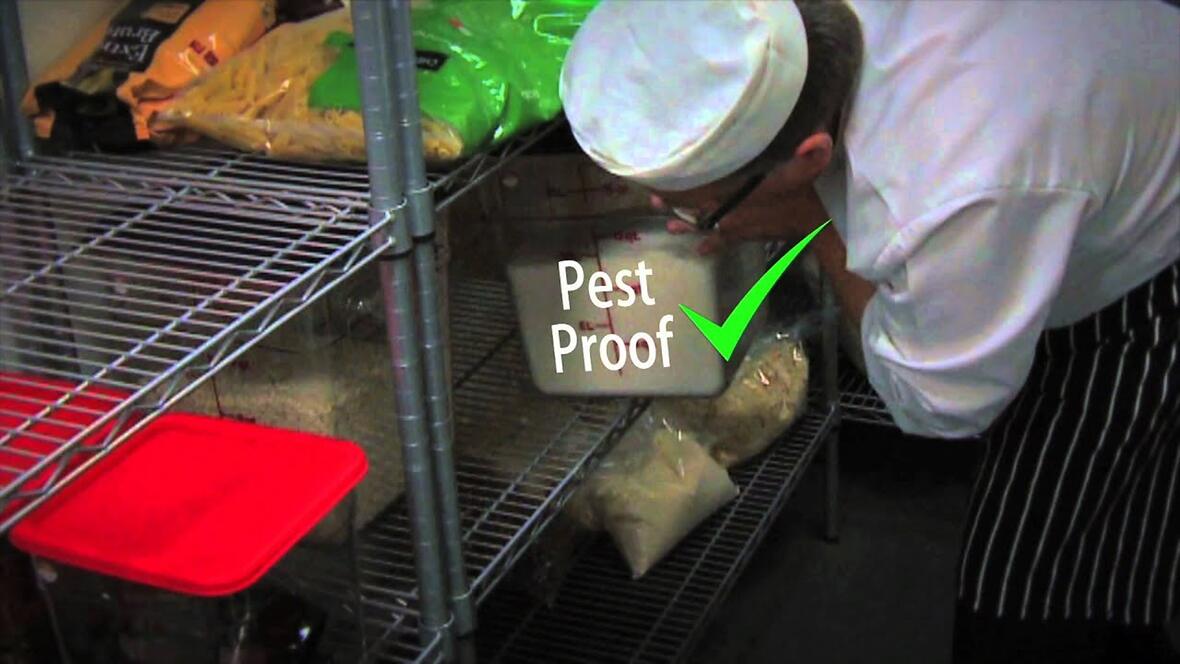
Video: Food safety coaching: pest control, from Food Standards Agency.
How a commercial job runs in Jacksonville
Five steps that start outside the building and end with a record.
-
Free site survey
The perimeter, the waste area, the docks and the interior are walked together, and the findings are photographed before anything is quoted.
-
Quote sealing separately
The one-time closure scope is listed opening by opening with materials named, apart from any monitoring, each with its own figure.
-
Close the building
Door seals, roll-up corners, penetrations and floor-to-wall junctions are sealed in steel, scheduled around trading hours where needed.
-
Trap and monitor inside
Devices go on the runs rather than along walls at random, checked on a set schedule, with open bait kept away from food handling.
-
Report every visit
Findings, actions, products, photographs and outstanding recommendations, carried forward so nothing drops off the list unnoticed.
What a commercial site should expect from the contractor
Three things that decide whether a site closes out or stays on a contract for years.
-
The survey starts at the perimeter
Commercial pressure in Jacksonville comes from the ground: burrows along foundations and seawalls, harborage in landscaping and pallet stacks, and entry at dock seals and roll-up door corners. A program that begins inside the kitchen treats the symptom. The first walk covers the waste area, the docks, the bank vegetation and the river or creek edge, and the exterior findings are photographed before anybody talks about devices.
Norway rats burrow along foundations, seawalls and riverbanks; Jacksonville is a Norway rat market as well as a roof rat one
-
Sealing quoted as its own scope
The one-time closure work is listed opening by opening with the material named, and priced apart from any recurring monitoring with its own figure and term. A single monthly number covering both makes it impossible to establish whether the building was ever closed, which is exactly why open-ended contracts outlast the problems that started them. Both lines are yours to accept or decline separately.
Full-building exclusion at residential scale runs $500 to $2,500 nationally, HomeGuide 2026
-
Records an inspector can read
Every attendance produces a dated record: findings by area, actions taken, devices placed or moved, any product applied with its target and location, photographs, and the recommendations the site has not yet acted on. That last line protects both sides when the cause is a propped door or a dumpster pad rather than the contractor. The FDACS credential of the business and of whoever attended appears on the document.
Rodenticide application requires an FDACS pest control license with a certified operator, Chapter 482, Florida Statutes
What Reddit Says About Commercial Rodent Contracts
The commercial complaints in r/pestcontrol and the small business threads are about contracts rather than about rats. The pattern is a monthly fee, a technician who arrives, checks stations and leaves, and a site that has the same activity two years later. Operators posting those threads almost always discover that sealing was never in the agreement, and that nobody had ever written down which openings needed closing.
The advice that comes back is to separate the two things: a one-time exclusion scope with a list of openings and a price, and a monitoring agreement with a term and a notice period, each standing on its own. The wider corpus says the same about residential bundling, and the commercial version costs more because it runs for years. Several posters describe the activity ending within weeks of finally getting the building sealed.
Two red flags recur. Bait stations used as the whole program, particularly in food handling areas, which the threads treat as attendance rather than control. And reports that score a site rather than describe it, where a monthly sheet of checkboxes gives a manager nothing to act on and nothing to show an inspector.
Questions people in those threads tell each other to ask before signing: is the sealing a defined scope with a list, what is the term and notice on the recurring part, can I see a sample visit report, who is responsible for the exterior on a leased unit, and how is out-of-hours attendance priced. The sample report is the most revealing of the five.
A typical commercial call on a Northside warehouse
The situation: A 40,000 square foot distribution warehouse on the Northside, a quarter mile from a tidal creek, with pallet racking against two exterior walls and a dumpster compound on a gravel pad at the rear. Droppings on the floor along the north wall, gnawing on stretch wrap at pallet level, and a customer audit due in six weeks. The incumbent arrangement is a monthly station check with no sealing ever quoted.
What gets done: The perimeter walk finds eleven burrow openings in the gravel pad and the landscaping bed along the north wall, a run worn under the fence line toward the creek, two dock door seals worn through at the bottom corners, a roll-up door with daylight visible at both jambs, and an open conduit penetration behind the electrical panel. The quote separates the closure list from a quarterly monitoring round. Door seals and jambs are replaced and the conduit closed in steel over two evenings outside shipping hours; the gravel pad burrows are collapsed and the landscaping bed cut back from the wall; traps go on the interior runs rather than spaced along the wall, checked weekly for a month.
How it turns out: Interior activity stops inside three weeks and the audit gets a dated file: the exterior findings with photographs, the closure list with materials, the weekly trap records, and two outstanding recommendations for the site to act on, which are moving the dumpster compound off the landscaping edge and ending the practice of propping the personnel door during loading.
Questions from Jacksonville businesses
What managers and owners ask before the first visit.
Program and contract
Why does the monthly service never end the problem?
Because attendance is not exclusion. A station check controls the animals that come in; it does nothing about the openings they come in through or the harborage they come from, so the site runs at a steady level indefinitely. On a Jacksonville commercial property the pressure is usually Norway rats burrowing along a foundation, a gravel pad or a creek bank and entering at a worn dock seal or a roll-up door corner. Closing the building and cutting back the harborage is what changes the level, and it belongs on a separate, itemized one-time scope with a list of openings.
Can the work happen outside trading hours?
Yes, and on kitchens and warehouses it usually has to. The sealing is scheduled around shipping or service, the noisier work is put into evenings or closed days, and the trapping rounds are timed so devices are not being handled around food preparation. Out-of-hours attendance is normally priced differently, so ask how before the schedule is set rather than after. The phone here is answered 24 hours a day, which is what makes an overnight or early-morning schedule straightforward to arrange.
Food service and records
Will you put bait down in my kitchen?
Open bait has no place around food handling, and the interior work is trapping and monitoring instead. Where any rodenticide is used on a site it is a licensed activity: under Chapter 482 of the Florida Statutes an FDACS pest control business license with a certified operator in the General Household Pest category is required, and the product, target and location go on the visit record. There is also a practical reason to avoid it indoors. The EPA puts death at four days to two weeks after an animal starts feeding on an anticoagulant, and the animal dies where it lives, which in a commercial building is a wall void or a ceiling.
What will I have to show an inspector or an auditor?
A dated record per visit, covering findings by area with the evidence described, every action taken and device placed or moved, any product applied with its target and location, photographs of conditions and completed closures, and the recommendations the site has not yet acted on. That last line is what protects the file when the cause is a propped door or a dumpster pad. The FDACS credential of the business and of whoever attended appears on the document, and the number can be verified on the state license search. Ask to see a sample record before you sign anything.
Still have a question? Call (904) 659-6044 and ask.
Book a free site survey
Give the address, the property type and what has been seen. A dispatcher lines up a contractor for a perimeter and interior walk at no charge.