
Roof Rat Removal in Jacksonville, FL
The scamper over a Jacksonville ceiling after dark is almost always a roof rat that climbed an oak, a palm or a service wire and found a gap at the roofline. Licensed contractors handle every job we route, and the roofline gets sealed before the traps come out.
- Inspection at no charge
- Someone answers 24 hours a day
- FDACS credential on every job
What roof rat removal in Jacksonville includes
Roof rat removal in Jacksonville runs as one program: a free inspection of the roofline and attic, sealing of every opening found, snap traps on the runs inside the attic, and a return visit before the job is closed. Each part is priced on its own line, so the sealing can be compared with another bid and the cleanup can be declined.
The order comes from the animal. A roof rat arrives from above, so the top of the house is where it gets in and the attic is where it lives. Trap without sealing and the attic refills from the same limb. The contractor we route closes the openings in the same visit as the traps go down, or ahead of them, and comes back to confirm the ceiling has gone quiet.
- A ladder walk of the roofline and a light through the attic, written up before any work (the inspection page describes the walk)
- Exclusion at soffit returns, roof-to-wall junctions, gable and ridge vents, the AC line-set boot and any other penetration, in quarter-inch galvanized hardware cloth and sheet metal (see rodent exclusion)
- Snap traps set on the dropping runs, left in place a week or more, checked on a schedule, every carcass taken away
- A verification visit for fresh droppings, new gnawing and any sound you have heard since
- Attic cleanup, insulation replacement and dead-rodent removal as separate lines you can take or leave
The noise costs people sleep, and the people who lose it are often told by friends that they are imagining things. Say exactly what you heard, where in the house and at what hour. Those three details tell whoever attends where the runs are.
Book the free inspection
Say what you hear, where in the house, and how long it has been going on. A dispatcher lines up the nearest certified contractor for a free roofline, attic and crawl-space inspection.
Signs of roof rats in a Jacksonville attic
Noise over the ceiling after dark, droppings on top of the insulation and hollowed fruit under a citrus tree are the three signs behind most Jacksonville roof rat calls, and any one of them is reason enough to book the free inspection. The first cold snap is when many households hear the attic for the first time.
- A scratch, a scamper or a rolling sound above a bedroom or hallway between dusk and first light
- Droppings along the top plate, on the insulation or on the garage floor under the attic hatch: banana-shaped, a quarter to half an inch long, with a point at each end, which is the roof rat signature UF/IFAS describes
- Gnaw marks on a soffit edge, a vent screen, the foam on the AC line set or the sheathing on a wire
- Dark greasy streaks where the coat rubs the same rafter or the same edge of a hole night after night
- Insulation tunneled into runs or heaped near the air handler
- A musky smell at the attic hatch or in the closet beneath it
- Oranges, grapefruit or kumquats on the ground with a clean round hole in the rind and nothing inside
Jacksonville operators report the indoor peak from roughly October through February, as the nights cool and an attic that baked all summer becomes the warmest dry place on the block. Winter is also when dooryard citrus ripens in Mandarin and the older neighborhoods, so an animal that has been upstairs since August starts leaving evidence under the tree. A squirrel makes its noise in daylight. A rat waits for the house to go quiet.
Work out roughly what this costs in Jacksonville
Six questions against the national cost bands printed further down the page. The range stays wide on purpose, because the roofline and the crawl-space perimeter are the two biggest variables and neither can be read off a form.
The bands behind this come from the 2026 HomeGuide national guides. Nothing is fixed until the free walk, and what arrives afterward separates trapping, sealing and cleanup into their own figures.
How roof rats get onto a Jacksonville roof
Roof rats reach a Jacksonville roof by climbing, and once on it they get into the attic through any opening a quarter inch or wider. UF/IFAS describes the species as arboreal, moving along limbs, wires and palm trunks, and puts its range at roughly 150 yards from the den, which takes in the neighbor's oak, the fruit tree two lots over and the power line down the street.
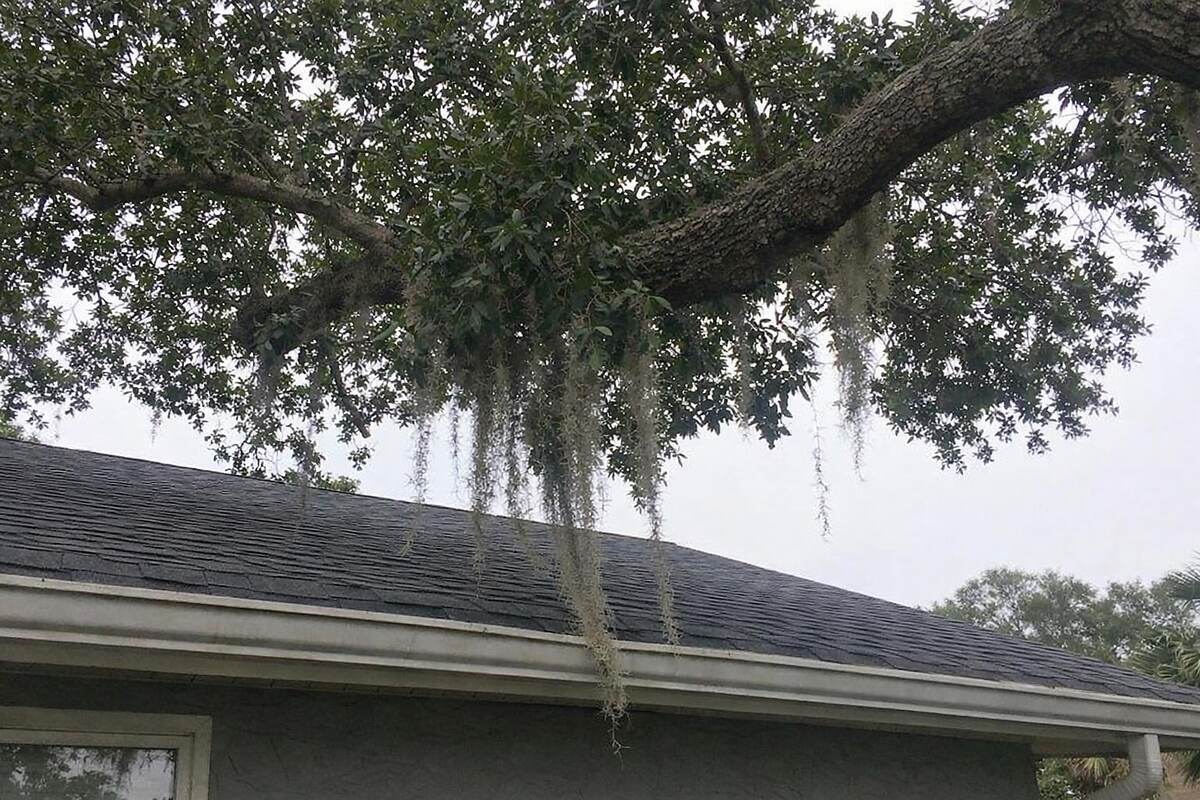
The live oaks that make Riverside, Avondale, Ortega, San Marco and Mandarin worth living in lay their limbs on the shingles, and a limb on a roof is a road. Palms do the same work with a nest site thrown in: the skirt of dead fronds shelters the animal and the trunk is the ladder. From the roof, the animal tests the same short list of weak points on almost every vented Florida attic.
- Soffit returns, where the soffit runs into a wall or the fascia, and any aluminum or vinyl soffit panel that has been pushed up
- Roof-to-wall junctions on two-story houses and split rooflines
- Gable vents with a chewed or rusted screen, and ridge and off-ridge vents with plastic mesh underneath
- The AC line-set penetration, the electrical mast, cable entries and plumbing vents
- The garage door seal and the ceiling access panel above the garage
- On a tile roof, the open ends of the first course at the eave where the bird stop is missing or displaced
The quarter inch is the working number. UF/IFAS gives it as the rat-proofing standard because a mouse fits a quarter-inch gap and a rat a half-inch one, so a sealing job is measured against the smaller figure. On older Riverside and Springfield stock the original soffits and a century of opened-up utility penetrations are the usual doorways; at the Beaches and on the Southside slab houses it is the soffit return and the gable vent. The Mandarin and Riverside pages go into the canopy and the housing stock in each area.
What keeps rats away permanently?
A sealed roofline keeps roof rats out of a Jacksonville attic for good, and nothing sold in a spray bottle or a plug-in device does the same job. The permanent fix is a building with no opening a quarter inch or larger at the top, trees trimmed back off the roof, and the animals that were already inside trapped out before the last gap closes.
| Approach | What it does | Whether it holds |
|---|---|---|
| Sealing plus trapping | Closes every opening, removes what is inside, verifies on a return visit | Holds, because the doorway is gone and the attic is empty |
| Trapping only | Removes the current animals | Fails inside weeks; the run from the oak is still open, and forum threads call this harvesting rats |
| Bait stations only | Kills some animals over days to weeks | Fails; nothing is sealed, and a rat that feeds in the attic dies in the attic or in a wall |
| Sealing only | Closes the openings with animals still inside | Fails; locked-in rats chew a new exit, sometimes into the living space |
| Ultrasonic devices, repellent sprays, a cat | Discourages, at best, for a while | Fails; none of them closes a hole, and the animal arrives from the tree line every night |
The materials decide whether the sealing lasts. Quarter-inch galvanized hardware cloth, sheet metal and a proper eave closure stay put; a bead of expanding foam on its own is chewed through in a night, and loose steel wool rusts out of a damp Florida soffit within a season. Trimming limbs and fronds back off the roof takes away the road, and picking up fallen citrus takes away the reason to travel it. The exclusion page compares the materials opening by opening.
How long does it take to get rid of rats?
A Jacksonville attic with a few roof rats and a sealed roofline is usually quiet inside a week or two, and a heavy infestation that has had a season upstairs takes one to two months. HomeGuide gives two to three days for trapping a small number of animals and one to two months for a severe case, and the jobs that outrun those figures are almost always the ones with nothing sealed.
Two pieces of UF/IFAS guidance set the pace. Roof rats are wary of anything new in their territory, so traps go down on the marked runs and stay there at least a week before anyone judges the placement. And the species breeds quickly: a female is mature at three to four months, carries a litter for 21 to 23 days, drops five to eight pups at a time and does so four or five times in a year. An attic that picked up a pair in the summer rains holds a colony by the first cold snap in November, which is the argument for booking the inspection on the first night of noise.
The multi-month stories in homeowner threads share one detail: a company that came back to reset bait, month after month, with no sealing on the invoice. Ask on the first visit what has been closed and with what. The about page sets out what routed contractors are expected to put on paper.
What roof rat removal costs in Jacksonville
Trapping and removal for a Jacksonville roof rat job typically lands in the $250 to $1,200 band HomeGuide publishes nationally for 2026, with full-home exclusion at $500 to $2,500 on top, and the free inspection turns the band into a figure. Angi publishes no Jacksonville cost page; its nearest Florida figures are for Tampa and are labeled that way below.
| Line item | National (HomeGuide 2026) | Tampa (Angi), nearest published Florida metro |
|---|---|---|
| Inspection | $0 to $175 standalone; Florida average near $162 | Free here |
| Trapping and removal | $250 to $1,200 | $441 to $1,716 per visit, $1,078 average |
| Full-home exclusion | $500 to $2,500 | $550 to $1,642 |
| Attic cleanup and decontamination | $600 to $2,500 | Quoted at inspection |
| Insulation removal and replacement | $2.50 to $5.50 per sq ft | Quoted at inspection |
| Dead rodent removal | $150 to $500 | Quoted at inspection |
| Full restoration | $3,000 to $10,000 and up | Quoted at inspection |
Four things move a Jacksonville roof rat quote inside those bands. The length of roofline and the count of openings comes first; a two-story Mandarin house with three roof-to-wall junctions takes longer to close than a Beaches bungalow. Roof type is second, since a metal roof at the Beaches and a tile roof in Ponte Vedra each need their own closures at the eave. Time in the attic is third, because months of occupation mean more animals and more contaminated insulation. Whether the insulation comes out is fourth. A house on a crawl space in the historic districts adds a long ground-level perimeter to the sealing, which pushes exclusion toward the upper half of its band. Ask whether a monthly monitoring plan is folded into any figure.
Jacksonville houses, Jacksonville winters and the roof rat
Jacksonville gives the roof rat a canopy, a mild winter and a housing stock built across a century, and each of those shapes the job. The animal is the same one that fills attics from Tampa to Miami; the houses and the seasons here change where the sealing happens.
Slab suburbs and the Beaches
Southside, Mandarin, Baymeadows and Deerwood are largely 1980s to 2000s block or frame on slab, with newer two-story stock south toward Bartram. Everything happens at the top: soffit returns, roof-to-wall junctions and the AC line set. Jacksonville Beach, Atlantic Beach and Neptune Beach are mostly 1970s to 1990s block bungalows on slab, with a fair share from the 1940s to 1960s, and the dune scrub and palms carry the animal to the eave. Metal roofs are common at the Beaches and need closures at the rib ends and the ridge. Barrel and concrete tile appears on some newer coastal stock and upscale subdivisions, and on those roofs the eave closure under the first course, the bird stop, is checked and replaced where it is missing.
Historic districts on piers
Riverside, Avondale, Ortega, Springfield and San Marco carry 1900s to 1930s houses on pier-and-beam crawl spaces, wood frame in older Riverside and masonry in Avondale, with original soffits and a century of opened-up utility penetrations. The roof rat still comes in at the top here, but a house with a crawl space has a second perimeter at the bottom, and Jacksonville is the one Florida city where crawl-space vent screening and skirting is a routine part of a rat job. Arlington, the Northside and the Westside add 1950s to 1970s ranches on a mix of slab and crawl space.
Cold snaps and the river
Rodents breed all year in a humid subtropical climate, and Jacksonville operators report the indoor peak from about October through February as the nights cool. The river adds a second trigger. Hurricane Irma in September 2017 put record St. Johns River flooding into Riverside, San Marco and downtown, and a flood pushes rats out of the ground and into attics, garages and wall voids while the wind opens soffits and piles up harborage. The CDC ties leptospirosis increases to hurricanes and floods, lists rodents among the reservoirs and recommends rodent control as post-flood prevention. The post-storm inspection covers that window.
Who may do the work
Trapping rats or mice in, on or under a structure for pay in Florida requires at least the FDACS Limited Commercial Wildlife Management Personnel certification under Chapter 482, and putting down rodenticide requires an FDACS pest control business license with a certified operator in the General Household Pest category. FWC needs no permit for rats and mice. Every contractor we route holds the FDACS credential the job needs, and the certificate can be confirmed in the FDACS license lookup before the ladder goes up.
Five questions for whoever comes to seal the roofline
Five answers separate a roof rat job that ends from one that runs for months: the FDACS certificate number, a quote in separate lines, the sealing on that quote with the material named, the warranty terms on the sealing, and the number of follow-up visits included. Whoever attends should give all five before any work starts.
- Which FDACS credential, and what is the number? The Limited Commercial Wildlife Management certificate covers trapping; a pest control business license with a certified operator is needed if bait is proposed. Look it up in the FDACS database that evening.
- Is the quote split into inspection, exclusion, trapping, follow-ups and cleanup, with any monthly plan on its own line?
- What gets sealed, where, and with what? Hardware cloth and sheet metal are the answer; foam alone is the red flag.
- How long is the sealing warrantied, does the warranty renew or expire, and what happens if the animals come back?
- How many return visits are in the price, and who removes the trapped animals?
Sealing by a handyman and FDACS-certified exclusion are two different services. The certificate is what allows the trapping, sets the order the work happens in, and puts every opening against a measured standard. Bring the same five questions to every bid, and use the contact page to get them answered before anyone is sent.
The services that usually run with this one
A Jacksonville rodent job is a sequence of separate lines, and these pages cover the steps on either side of this one.
- Rodent Exclusion: Roofline and crawl-space sealing to the quarter-inch standard in steel and sheet metal.
- Rodent Inspection: A free walk of the roofline, attic, crawl space and yard that sets the order of the job.
- Attic Cleanup and Decontamination: Droppings, nests and soiled insulation removed, then the attic sanitized.
Who attends and which FDACS certificate to look up is set out on the about page. Hours, the downtown address and the full service area are on the contact page.
The method that actually ends it
Why trapping alone rarely finishes a rat problem.
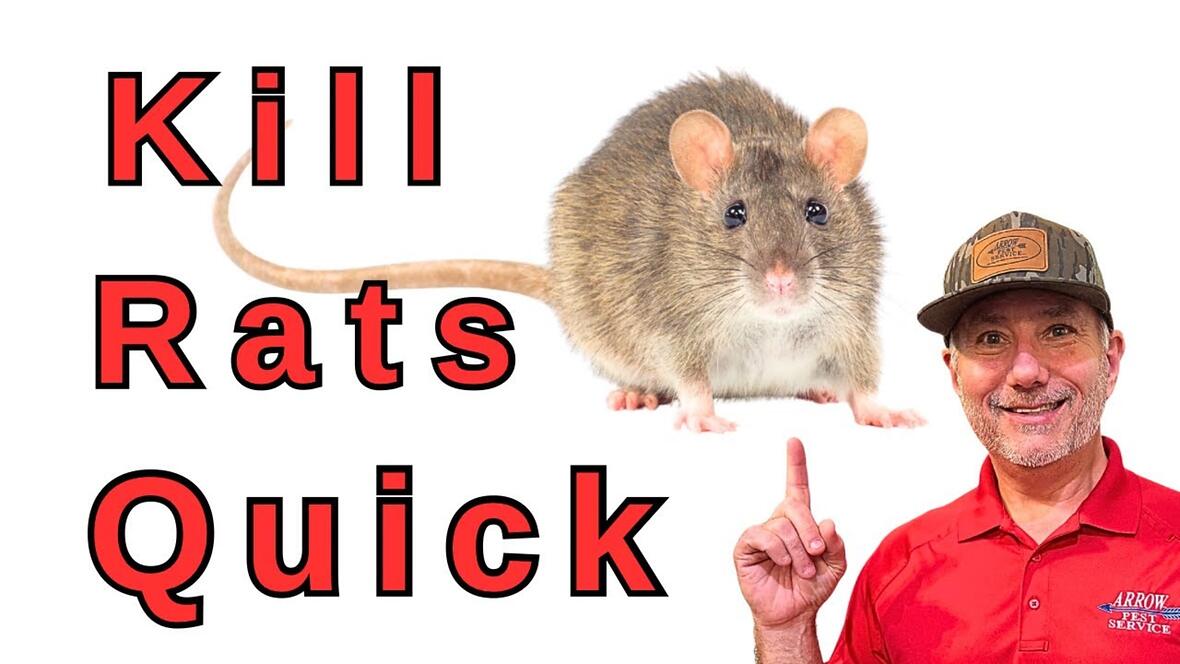
Video: Most Effective Rat Control Method Nobody Talks About, from Arrow Pest Service.
The five steps of a Jacksonville roof rat job
Sealing is the spine; the inspection feeds it, and the trapping, verification and cleanup hang off it.
-
Free inspection
Whoever attends walks the roofline from a ladder and the attic with a light, writes down every opening and every dropping run, and hands over a quote in separate lines.
-
Seal the roofline
Every gap a quarter inch or larger is closed with galvanized hardware cloth, sheet metal or an eave closure. This is the step that stops the next animal.
-
Trap on the runs
Snap traps go where the droppings and rub marks show the traffic and stay at least a week, since roof rats avoid new objects. Every carcass is removed on the checks.
-
Verify
A return visit looks for fresh droppings, fresh gnawing and any new sound. A missed opening gets closed on the spot.
-
Clean up if wanted
Soiled insulation, odor and chewed wiring are quoted as separate work once the attic is empty, and you decide whether to go ahead.
Why Jacksonville homeowners send roof rat work through us
Three things hold on every roof rat job we route.
-
The roofline is closed before the traps go down
The contractor we route measures every opening at the roofline against a quarter inch and closes it with galvanized hardware cloth, sheet metal or an eave closure in the same visit the traps are set, or ahead of it. An attic under a Mandarin oak refills from the canopy within weeks if the doorway is left open, which is why trapping on its own is the most criticized practice in homeowner forums. What was sealed, and where, goes on paper.
UF/IFAS: a quarter inch is the rat-proofing standard; a rat passes a half-inch gap
-
Traps stay a week on the marked runs
Roof rats are suspicious of anything new, so a trap moved after two quiet nights has been moved too soon. Whoever attends sets snap traps on the dropping runs and the rub-marked rafters, leaves them at least a week, checks them on a schedule and removes every animal caught. A carcass in the attic or a wall is the outcome a bait-only plan risks and a trapping plan avoids.
UF/IFAS: leave traps in place at least a week, since roof rats are wary of new objects
-
Bands you can see before the ladder goes up
The inspection is free and the quote that follows sits inside published bands: HomeGuide's 2026 national figure for trapping and removal is $250 to $1,200, and exclusion is $500 to $2,500. Each part of the job is a separate line, so the sealing can be weighed against another bid and the cleanup declined without touching the rest. Nobody else in the Jacksonville rodent results publishes a rodent price at all.
HomeGuide 2026: rat trapping and removal $250 to $1,200 nationally
What Reddit Says About Roof Rat Removal in Jacksonville
People posting in r/pestcontrol, r/HomeImprovement and r/homeowners about rats in the attic vet companies the same way: three or more bids on identical scope, because one quote on its own cannot be read. They want the number broken into trapping, sealing and cleanup, they prefer a local operator over a national brand and say so plainly, and they ask early whether the company does the repair work or only sets traps. Paying around $75 for someone to come out and produce a bid is a sore point that shows up again and again.
The red flags are consistent across the threads. A plan that is poison and nothing else, particularly one sold with the line that poison makes rats thirsty so they go outside to die, marks the operator as someone to walk away from. A bundled price that hides a long monthly monitoring contract gets the same treatment. So does sealing a house with animals still inside it, trapping for months with no sealing at all, and a company that keeps coming back with nothing changing. Quotes for what sounds like the same work run from under two thousand dollars to tens of thousands, and the question underneath every pricing thread is whether the poster is being taken for a ride.
The questions they hand each other are short: what is included and what is a separate line; whether the sealing carries a warranty and whether it renews; whether the company will clean and decontaminate or only trap; how many follow-up visits are in the price; and what happens if the animals come back. Species confusion is a real thread of its own, with one poster describing two exterminators who disagreed over whether the droppings came from a young roof rat or a mouse.
The Florida threads add the local detail: palm fronds and overhanging limbs as the roof rat highway, sheet-metal collars on tall palms, soffit gaps as the usual doorway, and one infestation traced back to the weeks after Irma. Sleep loss and the sense of the home having been invaded run through all of it, along with being told by friends and family that it is nothing.
The contractor we route is expected to answer that whole list on the first visit, in writing.
A typical roof rat call in Mandarin
The situation: A couple in a 1980s block house on a slab in Mandarin, under live oaks with a citrus tree at the back fence, start hearing something above the main bedroom the week of the first cold snap. It comes after eleven and stops before dawn, a light run with the occasional roll of something across the ceiling. A friend says squirrel. One of them is now waking at every sound and lying there tracking it from wall to wall.
What gets done: Whoever attends asks for the hours first, then puts a ladder on the back roof slope where an oak limb rests on the shingles. The soffit return at the roof-to-wall junction over the bedroom has a chewed corner and a dark rub mark beneath it; the gable vent screen has a hole worn through at one edge. In the attic there are banana-shaped droppings, a quarter to half an inch, along the top plate above the bedroom and a run pressed through the insulation. The limb is noted for pruning and the citrus for pickup. The soffit return and the gable vent get quarter-inch hardware cloth and a sheet-metal patch, the ridge vent ends are checked, the AC line-set boot is packed, and snap traps go on the dropping run for at least a week. The quote lists exclusion, trapping with a return visit, and optional cleanup on separate lines.
How it turns out: Several adults come out of the traps inside the first ten days, and after that the checks find nothing. The return visit finds no fresh droppings along the top plate and nothing new at the sealed points, the couple gets a written list of what was closed and with what, and the bedroom is quiet through the rest of the winter. The insulation line is left for spring.
Roof rat questions from Jacksonville homeowners
These are the questions that come up on the phone and in the homeowner threads.
Working out what is up there
How do I know if it is a rat or a mouse in the attic?
Look at the droppings and think about the hour. A roof rat's droppings are banana-shaped, a quarter to half an inch long and pointed at each end, per UF/IFAS; a mouse's are far smaller. The adult animal runs 12 to 14 inches nose to tail tip with a tail longer than its head and body. In Jacksonville the odds sit heavily with the roof rat, since house mice are a distant third here and seldom nest in a hot vented attic. Noise in daylight points to a squirrel. The free inspection settles it, and the species decides where the sealing and the traps go.
Should I be worried about hantavirus from the droppings?
Florida's identified hantavirus reservoir is the native cotton rat, an outdoor field species, and most US cases occur in the western states, so roof rat droppings in a Jacksonville attic carry a low hantavirus risk. They still deserve respect. The CDC says rodents carry many diseases, passed directly through urine, droppings, saliva and bites and indirectly through the fleas, ticks and mites that fed on an infected animal. Gloves and a respirator during cleanup are the right call on general contamination grounds, which is why attic cleanup is quoted and done as its own job.
If I saw one roof rat, how many are there?
One roof rat seen in a Jacksonville attic usually means several present, because the species breeds through every month of a mild year. UF/IFAS gives a female maturity at three to four months, a 21 to 23 day gestation, five to eight pups in a litter and four or five litters a year. An animal spotted after the first cold snap has likely been upstairs with company since the summer rains. The inspection reads the volume of droppings and the depth of the runs in the insulation to judge how long the attic has been occupied, and the trapping program is sized to that.
Getting them out and keeping them out
Do the chewed openings have to be fixed now, or can trapping carry it?
Repair them now, in the same program as the trapping. A chewed soffit return is a marked route with the animal's scent on it, and the next rat off the same oak uses it within weeks. Trapping with the hole still open is the pattern behind most of the multi-month timelines in homeowner threads; the sealing is the part that ends the job, and it is the part a warranty can attach to. Ask about the warranty terms before the work starts, and ask for the openings listed on the quote with the material for each.
Will you use poison in my attic?
Trapping is the default for a Jacksonville attic, and whoever attends explains the alternative before proposing it. The EPA describes most rodenticides as anticoagulants, with death coming four days to two weeks after the animal starts feeding, which means a rat baited in the attic tends to die in the attic or a wall; UF/IFAS notes that trapping reduces that risk. Where bait is used, it is a licensed-operator product in a tamper-resistant station under the label rules, and applying it requires an FDACS pest control business license with a certified operator. Second-generation anticoagulants have been withdrawn from consumer products by the EPA. Ask which approach is on the quote and why.
Still have a question? Call (904) 659-6044 and ask.
Book a free roof rat inspection in Jacksonville
Call (904) 659-6044 or send the form. Someone answers 24 hours a day, and the roofline and attic walk costs nothing.