Norway Rat Removal in Jacksonville, FL
Burrows at the seawall, runways along the foundation and noise low in the crawl space point to a Norway rat, the ground species that makes Jacksonville different from South Florida. Licensed contractors handle every job we route, from the burrow line to the sill.
- Free ground-level inspection
- Line answered 24 hours a day
- FDACS-certified contractors routed
What Norway rat removal in Jacksonville includes
Norway rat removal in Jacksonville works from the ground up: a free inspection of the foundation line, crawl space, seawall and dock, sealing of every opening at grade, snap traps on the runways, treatment of the burrows, and a return visit before the job is closed. Every part sits on its own line of the quote.
The species sets the shape of the job. A Norway rat digs and stays low, so the openings that matter are at the sill, the vents, the slab edge and the water, and the roofline is often untouched. The contractor we route seals the ground perimeter first or in the same visit as the traps, deals with the burrows outside, and comes back to confirm nothing has reopened them.
- A walk of the foundation, crawl space, garage slab edge, seawall cap and dock with a light and a probe, written up before any work (the inspection page covers the walk)
- Ground-level exclusion: crawl-space vent screens, skirting, sill gaps, the garage door seal, pipe and conduit penetrations at grade, and gaps where a slab or a seawall cap has settled (see rodent exclusion)
- Snap traps on the runways along walls and sills, left in place a week or more, checked on a schedule, every carcass removed
- Burrow treatment outside, with holes collapsed and rechecked so a reopened one shows
- A verification visit for fresh droppings, fresh digging and new runways
- Crawl-space cleanup, dead-rodent removal and a written report for a sale or a landlord as separate lines you can decline
The feeling of something living under the floor is hard to shake, and people who mention it get told they are overreacting. Say what you heard, where, and whether you have seen holes along the wall or the water. Those details tell whoever attends which perimeter to walk first.
Book the free inspection
Say what you hear, where in the house, and how long it has been going on. A dispatcher lines up the nearest certified contractor for a free roofline, attic and crawl-space inspection.
Norway rat or roof rat: which one is in the house
The height of the evidence names the species: a Norway rat leaves its sign at ground level and below, and a roof rat leaves it in the attic and at the roofline. Jacksonville has both, which is unusual for Florida, so the first job of the inspection is to work out which perimeter the animal is using.
| Field mark | Norway rat | Roof rat |
|---|---|---|
| Build | Heavier and stockier, with a blunt muzzle and a tail shorter than its head and body | Slender, 12 to 14 inches including a tail longer than the head and body (UF/IFAS) |
| Where it lives | Burrows in soil: along foundations, under slabs, in riverbanks, at seawalls and under docks | Attics, palms, oak canopy, the tops of walls |
| How it gets in | At grade: sill gaps, crawl-space vents, the garage door, pipe penetrations, cracks at a settled slab | From above: soffit returns, gable vents, roof-to-wall junctions |
| Where the droppings are | Low, along runways beside walls, in the crawl space, at burrow mouths | Along the top plate and attic joists; a quarter to half an inch, banana-shaped, pointed (UF/IFAS) |
| Where the noise is | Under the floor, in the garage, in the base of a wall, after dark | Over the ceiling, after dark |
| Which Jacksonville property | Riverfront, creek-side and dock lots, older commercial and port districts, crawl-space houses, dumpster yards | Almost any house under a tree or a palm |
The only rodent dropping measurement with a source behind it belongs to the roof rat, so a Norway rat is read from where the sign sits instead of from a ruler. Droppings and greasy rub marks low along a sill, a hole in the soil beside a footing with a worn path leading to it, and digging under a slab edge or a seawall cap are the Norway rat pattern. The roof rat page covers the attic species.
Signs of Norway rats around a Jacksonville property
Fresh holes in the ground beside a foundation, a seawall or a dock, with a worn path leading to them, are the surest sign of Norway rats on a Jacksonville lot, and noise under the floor after dark is the sign that gets people on the phone. Either one is reason to book the free inspection.
- Burrow openings in the soil at a footing, under a slab edge, in a riverbank, at a seawall cap or beneath a dock walkway, often with loose excavated dirt fanned out beside them
- A beaten path in the grass or mulch running along a wall or from a burrow to a food source
- Greasy dark rub marks low on a foundation wall, along a sill or at the edge of a hole in a vent screen
- Droppings along the base of a wall, in the crawl space, in the garage or behind a dumpster
- Gnawing at the bottom edge of a garage door, at the corners of a crawl-space door or on dock boards
- Scratching or movement under the floor, in the garage or low in a wall between dusk and dawn
- A musky smell from the crawl-space hatch, and pets fixated on one spot along the wall
Jacksonville operators report an indoor push from about October through February as the nights cool, and a ground rat moves into a crawl space or a garage for the same warmth a roof rat finds in an attic. Water is the other trigger. When a creek or the river comes up, burrows flood and the animals go uphill into the nearest dry void, which on the river side of San Marco or Riverside is usually a crawl space.
Where Norway rats burrow in Jacksonville
Norway rats in Jacksonville dig where the soil is soft, the cover is close and the water or the food is near: along the St. Johns and its creeks, behind seawalls, under docks, beside older foundations and slabs, and around the dumpsters of older commercial and port districts. A city built on a river with a working port and a century of masonry downtown gives the species more ground than any South Florida metro does.
Seawalls, riverbanks and docks
A seawall is a wall with soil behind it, and the cap and the joints open up as the ground settles. Burrow mouths appear at the cap, at the foot of the wall where it meets the bank, and under the landward end of a dock where the walkway shades the ground. Riverfront lots in San Marco, Ortega, Riverside and along the creeks that feed the river are the residential cases; marinas and the port are the commercial ones.
Foundations, slabs and crawl spaces
A pier-and-beam house in Riverside, Avondale, Springfield or San Marco has a crawl space with vents, a door and a sill, and a Norway rat treats a rusted vent screen or a gap under the skirting as a front door. On a slab house the animal digs beside the footing and follows a pipe or a conduit penetration in, or works the bottom seal of a garage door. Older 1950s to 1970s ranches in Arlington and the Westside sit on both kinds of foundation.
Dumpsters, warehouses and older commercial blocks
Restaurant rows, warehouses, marinas, the port and the older commercial blocks downtown and along the river give the species food and soft ground within a few yards of each other. Loading docks, dumpster pads, pallet stacks and the gap under a slab edge are the usual sites. The commercial rodent control page covers the site-wide version of the work, and the San Marco and Riverside pages cover the riverfront housing.
Can the chewed openings wait, or do they have to be repaired now?
Repair the openings now, because a Norway rat that has a burrow outside and a chewed vent screen inside will keep the two connected for as long as the hole exists. Trapping alone removes the animals in the crawl space this week and leaves the runway open for the ones in the burrow next week.
| Approach | What it does | What it leaves behind |
|---|---|---|
| Ground-level sealing plus trapping plus burrow treatment | Closes the openings at grade, removes the animals inside, collapses and rechecks the burrows | A house with no doorway and a lot with no active holes; verified on a return visit |
| Trapping only | Removes animals currently inside | The runway from the seawall or the footing stays open; the crawl space refills |
| Bait stations only | Kills some animals over days to weeks | Nothing is sealed; a poisoned rat can die under the floor, in a wall or where a dog or an owl finds it |
| Sealing only | Closes the openings with animals still inside | Rats trapped in a crawl space chew a new exit or come up into the living space |
| Filling burrows with dirt and nothing else | Blocks the hole for a night | The hole reopens beside the fill; nothing inside the house has been dealt with |
Materials matter more at ground level than anywhere else, because the animal is a digger. Crawl-space vents get quarter-inch galvanized hardware cloth on a frame; sill gaps and pipe penetrations get sheet metal or mortar; a gap under skirting or a garage door gets a metal kick plate or a new seal. Expanding foam on its own is chewed through and dug around. UF/IFAS gives a quarter inch as the rat-proofing standard, and a ground perimeter is measured against it the same as a roofline. Bait has a place on some riverfront and commercial sites, and where it is proposed it is a licensed-operator product in a tamper-resistant station, placed by a contractor holding an FDACS pest control business license with a certified operator. Anticoagulants make up most rodenticides, and the EPA gives four days to two weeks from the first feed to death, which is the argument for trapping under a house where a carcass would be hard to reach.
What happens if they come back?
A Norway rat job that was sealed at grade and had its burrows collapsed comes back for one of three reasons: an opening was missed, a flood or a storm opened a new one, or the food source next door is still there. Whoever attends should say before the work starts which of those the warranty covers and what a return visit costs.
The return visit is the check. Burrow mouths that were collapsed are looked at again; a reopened one means an animal is still working the lot, and the traps go back down. Vent screens, sills and the garage seal are checked for fresh gnawing. Fresh droppings low along a wall mean an opening was missed, and it gets found and closed under whatever terms were agreed. HomeGuide puts trapping a small number of animals at two to three days and a severe, long-running case at one to two months, and a riverfront lot with active burrows sits toward the long end because the outside population feeds the inside one.
Ask three things before signing: how long the sealing is warrantied and whether the term renews, whether a return visit inside the term is charged, and whether burrow rechecks are part of the price or a separate line. A Jacksonville lot on the water will be tested again after the next high river, so a warranty that names storms and floods is worth more than one that stays silent on them. The about page lists what routed contractors are expected to put in writing.
What Norway rat removal costs in Jacksonville
Trapping and removal for a Jacksonville Norway rat job typically falls inside HomeGuide's 2026 national band of $250 to $1,200, and ground-level exclusion sits inside the $500 to $2,500 national exclusion band, usually in its upper half where a crawl space or a seawall makes the perimeter long. Angi has no Jacksonville page; its Tampa figures are the nearest Florida data and are labeled as Tampa below.
| Line item | National (HomeGuide 2026) | Tampa (Angi), nearest published Florida metro |
|---|---|---|
| Inspection | $0 to $175 standalone; Florida average around $162 | Free here |
| Trapping and removal | $250 to $1,200 | $441 to $1,716 typical per visit; $1,078 average |
| Exclusion (full perimeter) | $500 to $2,500 | $550 to $1,642 |
| Crawl-space or attic cleanup and decontamination | $600 to $2,500 | Quoted at inspection |
| Dead rodent removal | $150 to $500 | Quoted at inspection |
| Full restoration | $3,000 to $10,000 and up | Quoted at inspection |
What moves a Norway rat quote is mostly perimeter and ground. A 1920s San Marco house on piers has a crawl space with a dozen vents, a long sill and a door, and every one of them is a line on the exclusion quote; a slab house in Arlington has a handful of penetrations and a garage door. A seawall or a dock adds outside work and burrow rechecks. Commercial sites are priced on the number of buildings, dumpster pads and loading docks. Cleanup under a floor is priced separately, and a monthly monitoring plan, if one is offered for a riverfront or commercial site, belongs on its own line where you can see it.
The river, the port and the ground rat
Jacksonville is the Florida city where the Norway rat is a genuine second species instead of a footnote, and the reason is the St. Johns River, the port, the creeks and the century-old districts along them. A South Florida rodent page can skip the ground rat almost entirely. A Jacksonville one cannot.
Riverfront and creek-side housing
San Marco, Riverside, Avondale and Ortega put 1900s to 1930s houses on pier-and-beam crawl spaces within a short walk of the water, many with a seawall and a dock of their own. The crawl space is the second perimeter that South Florida slab houses do not have, and crawl-space vent screening, skirting and sill work matter more in these districts than anywhere else in the state. Springfield has the same age of housing without the river frontage; the creeks and the older commercial blocks fill that role.
Floods and storms
Hurricane Irma in September 2017 pushed record St. Johns River flooding into Riverside, San Marco and downtown. A flooded burrow empties uphill, and the animals go into crawl spaces, garages and wall voids; storm debris and displaced skirting give them new cover and new doors. The CDC links leptospirosis case increases to hurricanes and floods, names rodents among the reservoirs, and recommends rodent control as post-flood prevention, which is a direct argument for a ground-level check on any riverfront lot after the water drops. The post-storm inspection is built for that.
Older commercial and port districts
Downtown, the riverfront commercial strips, the marinas and the port give the species the combination it wants: soft ground, cover, water and a steady food supply from dumpsters and loading docks. A restaurant, a warehouse or a marina on the river has a Norway rat problem before it has a roof rat one, and the work there is site-wide.
The season
Rodents breed all year in Jacksonville's humid subtropical climate, and Jacksonville operators report the indoor peak from roughly October through February as nights cool. For a ground rat that means a crawl space or a garage. Bait is more common on ground-level and commercial sites than in attics, and it is where the licensing line is clearest.
Licensing
Under Chapter 482 of the Florida Statutes, trapping rats or mice in, on or under a structure for compensation requires at minimum the FDACS Limited Commercial Wildlife Management Personnel certification, and applying rodenticide requires an FDACS pest control business license with a certified operator in the General Household Pest category. FWC needs no permit for rats and mice. Every contractor we route holds the FDACS credential the job needs; confirm the certificate through the FDACS license lookup before work starts.
What to ask before a Norway rat contractor starts
The questions for a ground rat job are the same five as for any rodent job, plus one about the burrows: the FDACS credential, a quote in separate lines, the openings and materials named, the warranty terms, the follow-up visits, and whether the burrows outside are part of the work. Whoever attends should answer all six on the first visit.
- Which FDACS credential, and what is the number? Trapping needs the Limited Commercial Wildlife Management certificate at minimum; bait needs a pest control business license with a certified operator. Check it in the FDACS lookup.
- Is the quote split into inspection, exclusion, trapping, burrow treatment, follow-ups and cleanup, with any monitoring plan on its own line?
- Which openings at grade will be closed, with what material? Hardware cloth, sheet metal and mortar are the answer; foam or a shovel of dirt is the red flag.
- What are the warranty terms on the sealing, does the term renew, and does it name floods and storms?
- How many return visits are included, and are burrow rechecks part of them?
- Who removes trapped animals, and what happens if one dies under the floor?
A handyman screening a crawl-space vent is doing a repair; FDACS-certified exclusion covers the trapping, the sequence and a measured standard for every opening, and that difference is what the certificate buys. Take the same six questions to every bid. The contact page takes them before anyone is sent, and the about page explains how routing works.
The services that usually run with this one
A Jacksonville rodent job is a sequence of separate lines, and these pages cover the steps on either side of this one.
- Rodent Exclusion: Roofline and crawl-space sealing to the quarter-inch standard in steel and sheet metal.
- Roof Rat Removal: Trapping the attic rat that answers most Jacksonville calls, sequenced with sealing.
- Commercial Rodent Control: Kitchens, warehouses, multifamily and riverfront commercial buildings, with records.
Who attends and which FDACS certificate to look up is set out on the about page. Hours, the downtown address and the full service area are on the contact page.
The method that actually ends it
Why trapping alone rarely finishes a rat problem.
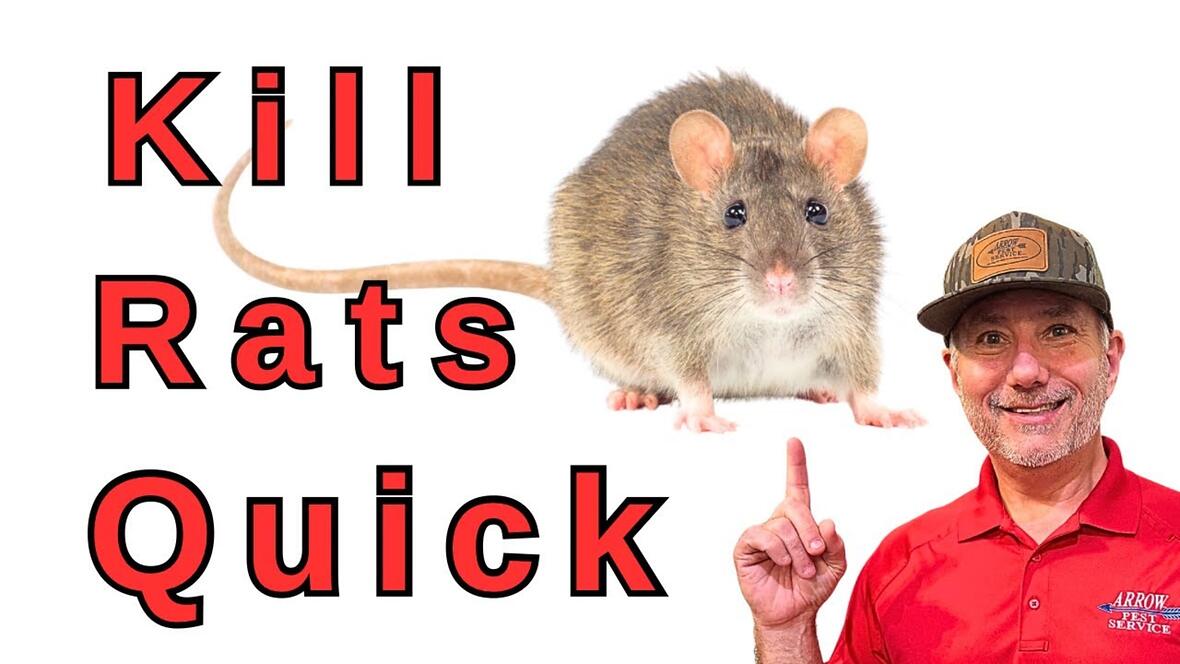
Video: Most Effective Rat Control Method Nobody Talks About, from Arrow Pest Service.
How a Norway rat job runs in Jacksonville
Ground-level exclusion is the spine of the job; the burrow work and the trapping hang off it.
-
Free ground-level inspection
Whoever attends walks the foundation, crawl space, garage, seawall and dock with a light and a probe, maps every burrow and every opening at grade, and writes a quote in separate lines.
-
Seal the perimeter at grade
Vent screens, sill gaps, skirting, pipe penetrations and the garage door seal are closed with hardware cloth, sheet metal and mortar, each measured against a quarter inch.
-
Trap the runways
Snap traps go along the walls and sills where the rub marks and droppings show traffic, stay at least a week, and are checked on a schedule with every animal removed.
-
Treat and collapse the burrows
Active holes at the seawall, the footing or the dock are dealt with outside and closed, so a reopened one shows on the return visit.
-
Verify, then clean up if wanted
A return visit checks the burrows, the sealed points and the crawl space for anything fresh. Cleanup under the floor is quoted on its own.
Why Jacksonville property owners route Norway rat work through us
Three things hold on every ground rat job we route.
-
The whole ground perimeter, including the water side
A Norway rat job in Jacksonville covers the crawl space, the slab edge, the garage and the seawall or dock, because the burrow outside and the runway inside are one system. The contractor we route maps every hole and every opening at grade before pricing, seals with hardware cloth, sheet metal and mortar, and comes back to check the burrows after the traps have run. A ground perimeter that stops at the front steps leaves the river side open.
CDC: rodent control is recommended as prevention after hurricanes and floods, with rodents named among leptospirosis reservoirs
-
Traps under the floor, bait only under license
Under a pier-and-beam house a carcass is hard to find and harder to reach, so trapping is the default and bait is proposed only where the site calls for it and only by a contractor holding the FDACS pest control business license that rodenticide requires. Most rodenticides are anticoagulants, and the animal keeps moving for days after it feeds, which is exactly what you do not want under a crawl space in August.
EPA: anticoagulant rodenticides typically kill four days to two weeks after feeding begins
-
A burrow map and a quote you can compare
The findings sheet marks every burrow and every opening at grade, and the quote prices exclusion opening by opening, trapping with the number of visits, burrow treatment, cleanup and any monitoring plan as separate lines. Riverfront and crawl-space perimeters are long, so exclusion here tends toward the upper half of the published bands, and the itemized sheet is how you see why.
Angi, Tampa: rodent exclusion $550 to $1,642, the nearest published Florida metro band
What Reddit Says About Norway Rat Removal in Jacksonville
The rat threads on r/pestcontrol, r/HomeMaintenance and r/florida treat one quote as meaningless and three as the minimum, and they want each one split into trapping, sealing and cleanup so the pieces can be compared. Local operators get the benefit of the doubt over national names. A question that comes up early is whether the company does its own repair and sealing work or subcontracts it, and another is whether an inspection costs money; paying around $75 to be told what the problem is comes up as a grievance often enough that a free walk reads as a real advantage.
Red flags are the same from thread to thread. Poison with no sealing behind it is the first, and anyone repeating the claim that rats go outside to die because the poison makes them thirsty is written off. A price with a monthly monitoring contract folded into it, a company that returns for months with nothing improving, and the two mirror-image mistakes of sealing with animals inside and trapping with nothing sealed all get named. Quotes for similar-sounding work spread from under two thousand dollars to tens of thousands, and the poster asking whether they are being cheated is a fixture of the corpus.
The questions they pass on are practical: what is included and what is extra; whether the sealing is warrantied and for how long; whether cleanup and decontamination are part of it or only trapping; how many follow-up visits come with the price; and what happens when the animals return. Timelines are a sore point of their own, with two months common and four months with no resolution appearing more than once.
The Florida threads add the ground-level detail that matters here: a 1925 Craftsman with a low crawl space solved by screening the whole perimeter, storm aftermath driving animals into houses, and the sleepless nights and the sense of a home no longer being one's own that run under nearly every post.
The contractor we route is expected to answer every one of those questions on the first visit and put the answers in writing.
A typical Norway rat call on the San Marco riverfront
The situation: The owners of a 1920s San Marco house on the river, with a seawall along the lot line and a dock, notice fresh holes in the ground at the seawall cap and a beaten track in the grass running toward the house. After dark there is movement low in the crawl space beneath the dining room, and the dog has started standing at one spot on the floor. A neighbor says it is probably a possum. Neither owner has slept through the night in two weeks.
What gets done: Whoever attends walks the seawall first and finds three active burrow mouths at the cap and one under the landward end of the dock, then follows the track to a crawl-space vent at the rear whose screen has rusted through at the bottom edge. Under the house there are droppings and greasy rub marks along the sill below the dining room and a gap where the skirting has pulled away from a pier. The findings sheet marks each burrow and each opening. The vents get quarter-inch galvanized hardware cloth on frames, the skirting gap gets sheet metal, the sill gap gets mortar, and snap traps go along the sill for at least a week. The burrows are treated and collapsed. The quote lists exclusion opening by opening, trapping with a return visit, burrow treatment, and optional crawl-space cleanup on separate lines.
How it turns out: The traps take several adults in the first week and then go quiet. On the return visit the collapsed burrows are still closed, the vents and the sill show nothing fresh, and the crawl space is silent. The owners get a written list of what was closed and where, and a note to call after the next high river so the seawall can be looked at again.
Norway rat questions from Jacksonville property owners
These come up on the phone from riverfront homeowners and commercial sites alike.
Working out what you have
How do I tell a Norway rat from a roof rat?
Look at where the sign is. A Norway rat is a heavier, blunt-faced ground animal whose evidence sits low: burrow holes beside a footing, a seawall or a dock, greasy rub marks along a sill, droppings in the crawl space or the garage, and noise under the floor. A roof rat is slender, with a tail longer than its head and body, and its evidence is in the attic and at the roofline. In Jacksonville a riverfront, crawl-space or commercial property with holes in the ground is the Norway rat case, and a house under an oak with noise over the ceiling is the roof rat case. The free inspection settles it.
Are the holes by my seawall really rats?
Fresh holes in the soil at a seawall cap, at a footing or under a dock, with loose dirt fanned out beside them and a worn path leading away, are the Norway rat pattern in Jacksonville. Crabs, armadillos and other diggers leave different work: crab holes sit in wet mud with no runway, and an armadillo leaves a wider, shallower cone with no path. Whoever attends confirms an active burrow by watching whether a lightly closed hole reopens overnight. Confirmed burrows go on the findings sheet with the openings at the house, because the two are treated as one job.
Getting rid of them
How long does it usually take to get rid of rats?
A crawl space with a few animals, once the perimeter is sealed at grade, is usually quiet within a week or two; a riverfront lot with active burrows and a long-standing crawl-space population runs one to two months. HomeGuide gives two to three days for a light trapping job and one to two months for a severe one. What stretches a Norway rat job is the outside population: while burrows at the seawall stay active, they keep supplying the house. Sealing, trapping and burrow treatment in one program, with a return visit to check for reopened holes, is what brings it to the short end.
Can you just put poison in the burrows?
Bait in a burrow is sometimes part of a riverfront or commercial job, and only a contractor with an FDACS pest control business license and a certified operator in the General Household Pest category may apply it. Anticoagulants make up most rodenticides, and the EPA gives four days to two weeks from the first feed to death, so a baited animal can die under the house, in a wall or out where a pet or an owl picks it up, and second-generation anticoagulants have been withdrawn from consumer products. Under a crawl space, trapping is the default because a carcass there is hard to reach. Bait on its own, with nothing sealed, is the plan homeowner threads warn about most.
Is it safe to be in the crawl space after they are gone?
Treat a crawl space that held rats as contaminated until it has been cleaned, and go in with gloves and a respirator if you go in at all. The CDC says rodents carry many diseases, spread directly through urine, droppings, saliva and bites, and indirectly through fleas, ticks and mites that fed on an infected animal. Hantavirus is a low concern here: Florida's identified reservoir is the native cotton rat, an outdoor field species, and most US cases are western. The respirator is for general contamination. Crawl-space cleanup and dead rodent removal are quoted as separate lines.
Still have a question? Call (904) 659-6044 and ask.
Book a free Norway rat inspection in Jacksonville
Call (904) 659-6044 or send the form. Someone answers 24 hours a day, and the walk of the foundation, crawl space and seawall costs nothing.